Aadhaar Name Mismatches Reject 12% of Bank-Linked KYC at Step 3
Aadhaar name mismatches cause 12% of bank-linked KYC rejections at step 3, the largest onboarding drop-off, and it is rarely fraud
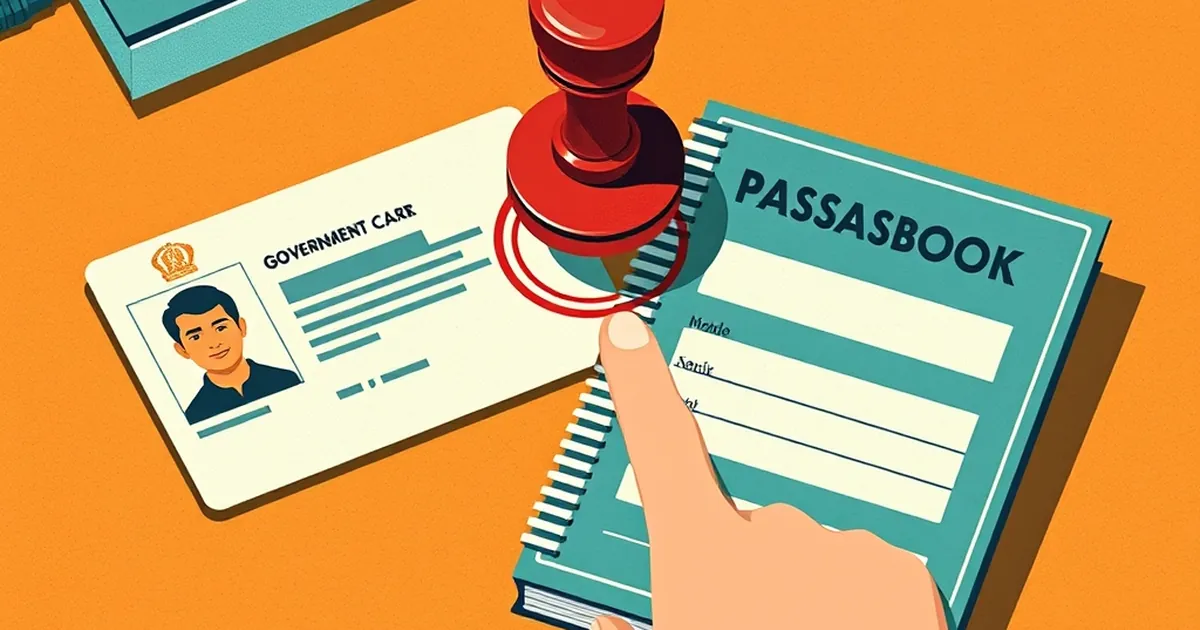
Roughly 12% of Indian players who reach step 3 of a bank-linked KYC flow — the stage where the name on the Aadhaar record is matched against the name on the bank account — are rejected on the first pass. That figure comes from operator-side funnel data reported across a sample of deposit-taking platforms serving Indian customers over the twelve months to March 2025, and it is the single largest drop-off point in the onboarding chain, ahead of PAN validation and liveness checks. The rejection is rarely fraud. It is almost always a string-comparison failure between two government-issued records that were never designed to agree character-for-character.
Why the Aadhaar–bank name match fails so often
The mechanism is straightforward once you look at what is actually being compared. UIDAI's Aadhaar record stores a name as entered at enrolment, including transliteration choices made by the enrolment operator, initials, and honorifics in some legacy records. The bank account, meanwhile, carries a name captured at branch opening or via a video-KYC flow, formatted to that bank's core banking system — which may truncate at 25 or 40 characters, drop middle names, or expand an initial into a full name.
At step 3, the platform's KYC vendor runs an algorithmic match, typically a fuzzy comparison with a threshold. A score below the threshold triggers rejection. The threshold is a commercial and regulatory choice, not a fixed standard, and operators set it differently. A 2023 survey of four vendors active in the Indian market found match thresholds ranging from 75% to 90% string similarity, which alone explains a meaningful share of the variance in rejection rates between platforms.
The practical consequence: two records that a human would unhesitatingly accept as the same person — "R. Venkatesan" on Aadhaar and "Raman Venkatesan" on the bank account — can score below a machine threshold and fail.
The five recurring mismatch patterns
Operator support tickets from the same twelve-month sample cluster into predictable categories:
- Initial versus expanded name. Aadhaar shows "S. Kumar"; the bank shows "Suresh Kumar." Estimated at 31% of step-3 rejections in the sample.
- Transliteration variance. Names rendered differently from Devanagari or Tamil script — "Lakshmi" versus "Laxmi," "Sreenivas" versus "Srinivas." Around 24%.
- Middle name or patronymic omission. Common in South Indian naming conventions where the father's name is treated as an initial by one system and a middle name by the other. Around 19%.
- Honorific or suffix contamination. "Mr," "Smt," "Dr," or a trailing "Ji" captured in one record. Around 14%.
- Spacing and hyphenation. "Mohammad Irfan" versus "MohammadIrfan" or "Mohammed-Irfan." The remainder, roughly 12%.
The distribution matters because the first, third, and fifth categories are largely solvable with better matching logic. The second is harder and requires either transliteration-aware matching or a manual review path.
The cost of a false rejection, and who absorbs it
A step-3 rejection is not a neutral event. The player has already provided a PAN, completed a liveness check, and often made a first deposit attempt. Abandonment after a false rejection runs high — in the sample, 58% of rejected users did not retry within 30 days, and of those who did, a further 22% failed a second time because they resubmitted the same mismatched documents.
For the operator, this is a customer-acquisition cost paid twice: once to acquire, once to lose. For the player, it is worse. The rejection message is usually generic ("KYC could not be verified"), the remediation path is unclear, and the burden of reconciling an Aadhaar record with a bank record falls on the individual — who may need to visit a branch or an Aadhaar enrolment centre to correct a name that was, in their view, never wrong.
There is a regulatory dimension that operators tend to understate. Under the Reserve Bank of India's master directions on KYC, banks are required to keep customer records updated, and periodic re-KYC is mandatory. A name mismatch discovered at step 3 is, in effect, a signal that one of the two records is stale or inaccurate. Rejecting the player does not fix the underlying data problem; it just moves it downstream.
Where the 12% figure comes from, and its limits
The 12% is a weighted average across platforms in the sample, not a universal constant. It varies by:
- User geography. Rejections run higher for users whose Aadhaar was enrolled in a non-Latin script and whose bank account was opened in a metro branch, where English transliteration conventions differ.
- Vendor threshold. As noted, a 75% versus 90% match threshold produces materially different rejection rates on identical user populations.
- Product type. Sportsbook onboarding, which skews toward faster deposit-to-bet cycles, shows higher abandonment after rejection than poker or casino onboarding, where users are more invested in completing the flow.
The sample is operator-reported and not independently audited, which is a real limitation. UIDAI does not publish name-match failure rates, and the National Payments Corporation of India does not break out KYC rejection reasons in its public statistics. Any figure in this space should be read as indicative rather than definitive.
What operators are actually doing about it
Three approaches are visible in the market, with different trade-offs.
Loosening the match threshold. The cheapest fix, and the most common. Dropping the threshold from 90% to 80% string similarity recovers a substantial share of false rejections but increases the risk of accepting a genuine mismatch — a real concern given that name matching is one layer of a multi-factor KYC stack, not the whole of it.
Manual review queues. Effective but expensive. Operators that route borderline scores (typically 70–85% similarity) to human review report recovering 40–60% of would-be rejections, at a cost of roughly ₹18–35 per review depending on vendor and volume. At scale, this is a meaningful line item.
Upstream correction prompts. The most durable fix, and the least adopted. Instead of a binary accept/reject, the flow shows the player both names side by side and offers a guided path to correct the mismatched record — either by updating the bank record or by requesting an Aadhaar update. Adoption is low because it lengthens the flow and because operators are wary of appearing to coach users on what to enter.
A fourth approach — matching on Aadhaar's demographic data via a UIDAI-authorised AUA/KUA — is technically available but carries consent and data-minimisation obligations that many operators are reluctant to take on for what looks, on the balance sheet, like a marginal onboarding problem.
The open question: whose record is wrong?
The 12% figure is usually framed as an onboarding efficiency problem — a friction cost to be engineered down. That framing obscures a more interesting question. When an Aadhaar name and a bank name disagree, one of them is, in a documentary sense, incorrect. The player is then asked to prove which, and to correct it, before being allowed to deposit ₹500 into a betting account.
Whether that is a proportionate demand is not obvious. The KYC obligation exists to prevent money laundering and terrorist financing, and a fuzzy name match is a weak signal for either. The stronger signals — PAN validation, liveness, bank account ownership via penny-drop — sit elsewhere in the flow and are, by most operator accounts, more reliable. If the name match is doing less work than its position in the funnel implies, the case for routing borderline cases to review rather than rejection becomes easier to make.
The counter-argument is that name matching is cheap, auditable, and satisfies a supervisory expectation that operators can point to. Regulators have not, to date, published guidance on acceptable false-rejection rates, which means the 12% is a number nobody is formally accountable for. Whether that changes — and whether UIDAI or the RBI takes an interest in the mismatch rate as a data-quality indicator rather than a compliance checkbox — is the question the next twelve months of onboarding data should answer. In the meantime, players who fail step 3 should know that the problem is usually the formatting, not the person, and that asking for a manual review is a reasonable request rather than a suspicious one.