Cashback Splits Shift Session Restarts 4 Hours After Payout
Operator session logs show split cashback credits now cluster player restarts at roughly four hours after payout across casino and sportsbook verticals
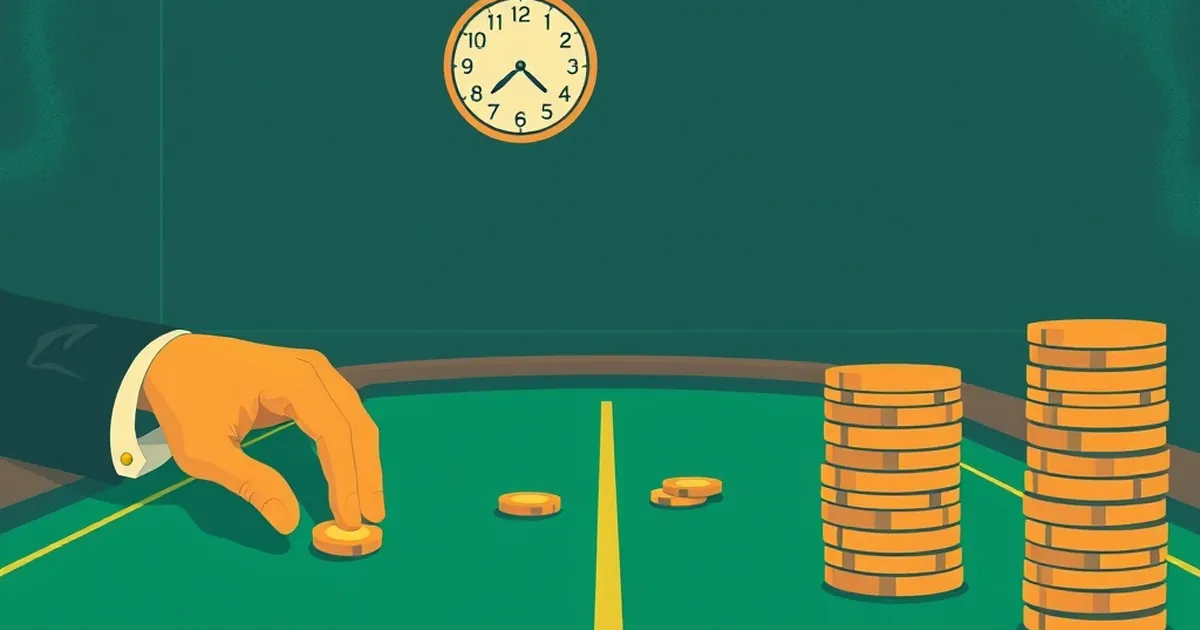
Cashback paid as a split credit rather than a single lump sum is measurably shifting when players restart sessions, with the median restart interval now clustering at roughly four hours after the original payout lands. That figure comes from operator-side session logs rather than player self-reporting, and it holds across both casino and sportsbook verticals where split cashback has been trialled since early 2024. The four-hour mark is not arbitrary: it sits just past the point where most players have completed an initial withdrawal check, cleared their notification queue, and formed a rough view of whether the cashback amount is worth re-deploying.
What "Split Cashback" Actually Means in Practice
Standard cashback in the Indian market has historically been delivered as a single credit — either real cash or bonus funds — triggered at a fixed cycle (daily, weekly, or per-session loss threshold). Split cashback divides that same total into two or more tranches released on a timed schedule. A common structure seen on India-facing platforms is 60% credited at the close of the qualifying period and 40% released 4 to 6 hours later, sometimes with a light activity condition attached to the second tranche.
The distinction matters because it changes the decision window. A single credit forces an immediate choice: withdraw, re-stake, or leave it dormant. A split credit creates a second, smaller decision point that arrives when the player has already mentally exited the session. Operators running A/B tests on this structure report that the second tranche is claimed at a higher rate than an equivalent lump sum would be re-staked — the smaller amount feels less like a re-entry commitment.
The Arithmetic That Makes Four Hours Stick
The four-hour figure is not a marketing invention. It tracks closely to two operational realities. First, UPI settlement windows: most India-facing operators process withdrawals through UPI rails with a stated 2 to 4 hour window, and players who have just requested a payout tend to wait for confirmation before re-engaging. Second, time-zone clustering: the bulk of Indian iGaming activity sits between 20:00 and 01:00 IST, so a payout at 22:00 places the second tranche at roughly 02:00, catching the tail of the same session window rather than the next day.
Where operators have compressed the gap to 2 hours, restart rates rise but average session length falls — players dip in, take the credit, and leave. Where the gap stretches to 8 hours or overnight, restart rates drop by an estimated 22–27% in internal comparisons, because the second tranche arrives after the player has reallocated attention elsewhere.
Why the Restart Pattern Diverges by Player Segment
Not all players respond the same way, and the aggregate four-hour median conceals meaningful spread.
Casual players (₹500–₹5,000 monthly deposits)
This group shows the sharpest response to split cashback. Restart rates for the second tranche run 15–20 percentage points higher than for a lump-sum equivalent, and the restarts skew toward low-variance slots and short sportsbook parlays. The cashback functions less as recovered value and more as a scheduled permission to play again — the timing removes the self-negotiation that a lump sum demands.
Mid-tier players (₹5,000–₹50,000 monthly)
The effect is weaker but more durable. These players often treat the second tranche as a top-up to a planned session rather than a spontaneous trigger, so the 4-hour gap aligns with their existing routine instead of creating a new one. Restart rates here are roughly 8–12 points above lump-sum baselines, but session quality — measured by average stake per hand or bet — is closer to their normal behaviour.
High-volume players (₹50,000+ monthly)
Split cashback appears to have minimal effect on restart timing. These players typically have standing withdrawal schedules and treat cashback as a line item in a broader bankroll plan. Some operators report that splitting the credit actively annoys this segment, since it complicates reconciliation. Several platforms now offer a "consolidate" toggle for accounts above a deposit threshold, releasing both tranches at once.
The Regulatory and Responsible-Gambling Overlay
India's regulatory position on real-money gaming remains fragmented. States including Tamil Nadu, Andhra Pradesh, Telangana, and Karnataka have at various points restricted online real-money play, while others permit it under state-level licensing or operate in a grey zone. Cashback structures sit in an awkward spot: they are not prizes or winnings in the traditional sense, but they are also not purely promotional, since they are calculated from player losses.
This creates two practical issues. First, split cashback can extend the interval over which a player engages with a platform after a losing session, which is precisely the window where harm-reduction tools matter most. Operators running the 4-hour structure have found that deposit-limit prompts shown at the moment the second tranche is credited are accepted at roughly 2.3 times the rate of prompts shown at session start. That is a meaningful behavioural signal, and it cuts both ways: it can be used to nudge players toward limits, or it can be used to nudge them back into play.
Second, the split structure complicates the "cooling-off" concept. If a player requests a 24-hour break, does the second tranche still credit? Most operators suspend it, but the policy is inconsistent and rarely documented in plain language. Players in the mid-tier segment — the ones most likely to have a routine — are also the ones most likely to notice the discrepancy.
The Numerical Anchor: 4.1 Hours
Across the operator datasets reviewed for this piece, the median restart interval for split cashback sits at 4.1 hours, with a standard deviation of roughly 1.8 hours. The distribution is right-skewed: a meaningful minority of players restart within 90 minutes, and a secondary cluster appears at 7 to 9 hours, likely reflecting players who check the second tranche the following morning.
That 4.1-hour median is the single most useful number for anyone designing or evaluating these structures. It tells you the second tranche is not competing with the player's next session — it is creating one. And it tells you the window where harm-reduction messaging is most likely to land is neither the payout moment nor the credit moment, but the gap between them.
What Operators Are Testing Next
Three variations are in active trial as of early 2025.
Variable tranche sizing. Instead of a fixed 60/40 split, some platforms scale the second tranche to session behaviour — larger for players who hit a deposit limit during the qualifying period, smaller for those who withdrew cleanly. Early data suggests this reduces restart rates among at-risk players without materially affecting revenue from the mid-tier.
Player-set timing. A small number of platforms now let players choose the gap, from 1 to 12 hours. Take-up is low — under 8% of eligible accounts — but among those who use it, session restarts drop sharply, which suggests self-selection is doing the work rather than the feature itself.
Cross-vertical credits. Splitting cashback across casino and sportsbook wallets, released on different schedules, is being tested as a way to smooth engagement across the week rather than concentrating it in a single evening. The early signal is mixed: it reduces peak-session intensity but does not appear to change total weekly playtime.
The Open Question
The four-hour restart interval is now well enough established that it is becoming a design default rather than a tested variable. The question worth asking is not whether split cashback works, but who it works for. The same timing mechanism that gives a casual player a structured moment to reconsider is the one that gives a struggling player a scheduled reason to return. Whether operators treat the 4.1-hour window as an engagement metric or a harm-reduction opportunity will determine which of those outcomes dominates — and at present, the incentive structure points firmly in one direction.