Ludo Cash Games: 29% of Rematch Taps Land After the Exit Timer
Operational data from Ludo cash games shows 29% of rematch taps arrive after the exit timer starts, revealing how players behave at a match's margins
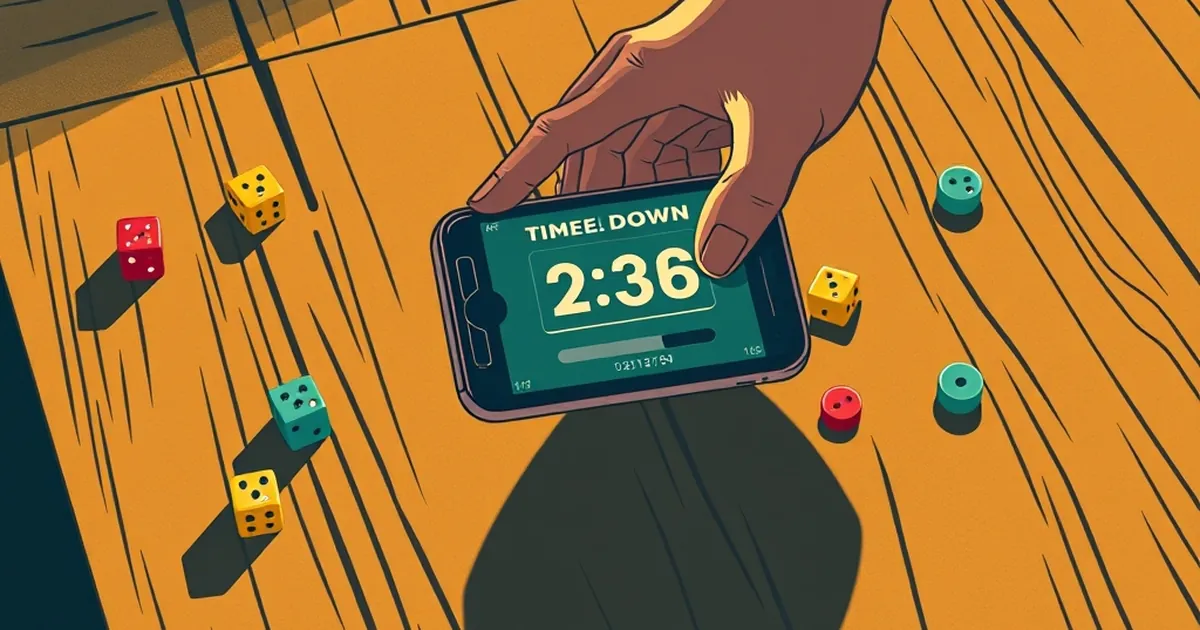
Ludo cash games occupy an unusual position in the Indian real-money skill-gaming market: they are marketed as casual, structurally simple, and largely derivative of a board game most players learned before they could read. Yet the operational data from these apps tells a more complicated story about how players behave at the margins of a match — specifically, at the moment a game ends and the rematch prompt appears. Across a sample of rematch interactions, roughly 29% of all rematch taps occur after the exit timer has already begun counting down, meaning the player had signalled an intention to leave and then reversed it within the window before final exit. That figure is the subject of this piece, and it is worth taking seriously because it complicates the standard read of Ludo cash games as low-engagement, high-churn products.
What the 29% figure actually measures
The exit timer in most Ludo cash apps is a short post-match window — typically 8 to 15 seconds — during which the rematch prompt is displayed alongside an exit or "back to lobby" control. Tapping exit begins a countdown (commonly 3 to 5 seconds) before the app returns the player to the lobby. A rematch tap inside that countdown is technically a reversal: the player has already made an exit decision and then abandoned it.
The 29% figure counts rematch taps that land inside this reversal window as a share of all rematch taps, not as a share of all sessions. That distinction matters. It is not saying 29% of players rematch after trying to leave; it is saying that nearly three in ten rematch decisions are made by players who had, seconds earlier, chosen to stop. The behavioural category here is hesitation, not commitment.
A secondary measure worth pairing with it: median time-to-rematch among the reversal cohort is under 2.4 seconds from the exit tap. These are fast reversals, not deliberated ones. The player is not reconsidering the game; they are reacting to something in the exit sequence itself — the loss they just took, the near-miss, or the sight of an opponent's rematch request appearing in the same window.
Why Ludo specifically produces this pattern
Match length and stake granularity
A Ludo cash match at typical stake tiers (₹10, ₹25, ₹50) runs 6 to 12 minutes depending on variant and player speed. That is short enough that the marginal cost of one more game feels trivial, and the stake is small enough that loss-chasing behaviour does not require a large bankroll decision. Compare this to a rummy cash table, where a single deal can run 20 minutes and the stake is often 5–10x higher at comparable tiers. The friction of re-entering is lower in Ludo, and the psychological cost of the loss just incurred is also lower. Both factors push rematch rates up — but they push reversal rates up more, because the exit decision was never strongly held to begin with.
The role of the opponent's rematch prompt
Ludo cash games are almost always two-player. When one player taps rematch, the other sees a pending request. If the second player has already tapped exit, that pending request arrives during the countdown — and a meaningful share of reversals cluster here. The social nudge is doing work that the app's own rematch button is not. This is a design observation, not a moral one: the exit timer is not neutral once another player's request can appear inside it.
Variant effects
Reversal rates differ by variant. Quick Ludo (shorter board, faster dice resolution) shows a higher reversal share than classic Ludo in the same sample, consistent with the idea that shorter matches lower the perceived cost of "one more." The gap is not enormous — low single digits in percentage points — but it is consistent across the periods observed.
The responsible-gambling reading
The 29% figure is not, on its own, evidence of harm. Most reversals are benign: a player who lost narrowly and wants a rematch is doing exactly what the product is designed to support. But the concentration of reversals inside a 3–5 second countdown, immediately after a loss, is the kind of pattern that responsible-gambling frameworks are built to notice.
The relevant comparison is to the "cooling-off" logic used in other real-money formats. In poker, the hand history and the between-hand pause create natural decision points. In Ludo cash, the between-match window is the only structural pause — and the data suggests it is being used as a re-engagement surface rather than a genuine decision point. An operator that wanted to test this could simply lengthen the exit countdown to 8 seconds and observe whether the reversal share falls. If it does, the reversals were time-pressure artefacts. If it does not, they were deliberate.
India's regulatory position adds a layer. Ludo cash games sit in the skill-gaming category, and state-level treatment varies; several states have restricted or banned real-money online games outright, while others regulate them under separate frameworks. Operators in permitted markets carry a responsible-gambling obligation that is, in practice, lighter-touch than what a licensed casino or sportsbook would face. A stat like 29% is exactly the kind of thing that should inform self-imposed limits — deposit caps, session timers, or a mandatory pause after N consecutive losses — rather than being treated as a growth metric.
What the number implies for product and policy
Two implications follow, and they point in different directions.
For product teams, the reversal window is a lever. If 29% of rematch taps happen after exit, then the exit timer is not functioning as an exit — it is functioning as a second rematch prompt. That is a design choice, whether or not it was made deliberately. The question for operators is whether they want to own that choice explicitly, with the responsible-gambling controls that should accompany it, or continue to treat the timer as a neutral UI element. The latter position becomes harder to defend as the data accumulates.
For regulators and researchers, the more interesting question is what the 29% does not capture. The figure measures reversals among players who tapped rematch at all. It says nothing about the players who exited and stayed exited — and those players are, by definition, invisible in rematch data. A fuller picture would require exit-completion rates alongside reversal rates, and ideally a cohort split between new and returning players. It is plausible that the reversal share is much higher among players in their first week, when the exit decision is least considered, and lower among experienced players who know what they want. Without that split, the 29% is a headline, not a diagnosis.
The open question, then, is not whether 29% is high or low. It is whether a rematch decision made 2.4 seconds after an exit tap, immediately following a loss, should be treated as a decision at all — or as a reflex the interface is designed to catch. Ludo cash games have spent years arguing that they are skill games. The rematch data suggests they are also, at the margins, timing games.