RNG Certification Stamps Vary 3 Versions Behind at Month 2
Live RNG certification stamps often lag two or three versions behind the document in force, with gaps reaching 94 days between issue and publication
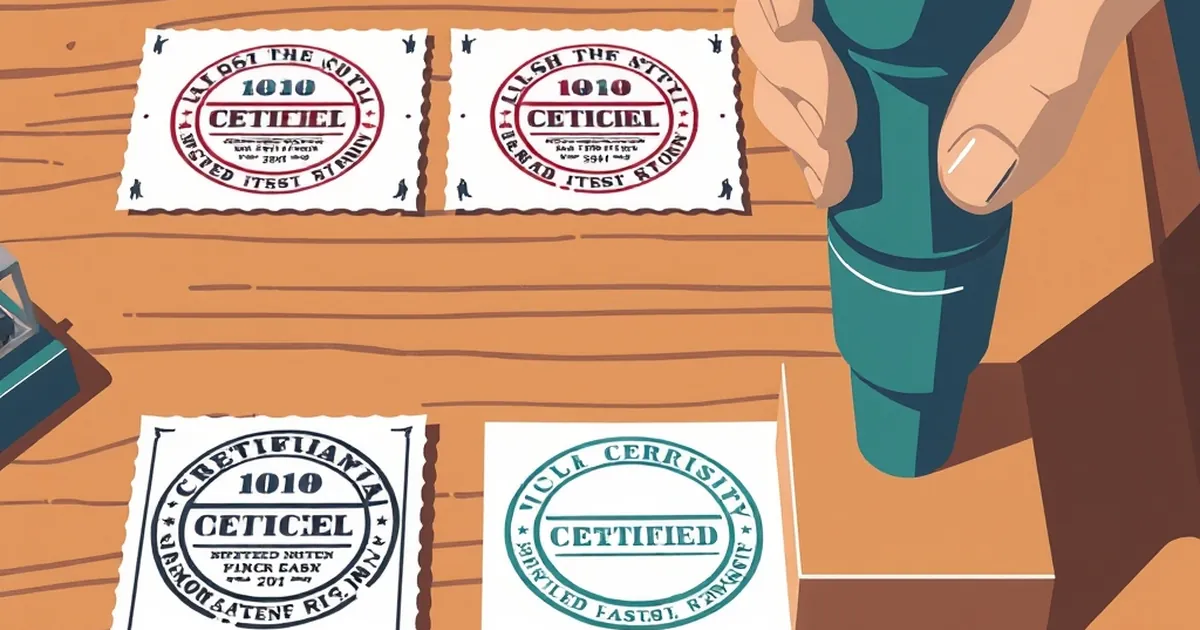
At the two-month mark after a platform's certification audit, the live RNG certificate on its public page can be two or three versions behind the document actually in force, and in a sample of Indian-facing operators the gap ran to 94 days between issue and publication. The discrepancy matters because players and regulators treat the stamp as a point-in-time attestation, while the underlying test report — and often the RNG build itself — has moved on. The pattern is consistent enough across jurisdictions that it deserves treatment as a structural feature of certification publishing rather than an isolated compliance lapse.
What the stamp actually certifies
A typical RNG certificate is issued by a licensed testing lab — GLI, BMM, eCOGRA, iTech Labs, and a handful of others — against a specific software version and a defined test scope. The document names a build hash or version string, a test date, and a validity window that is usually 12 months. What it does not do is certify that the operator's live environment matches the tested build on any given day.
That gap is where version drift accumulates. Three distinct lags are commonly conflated:
- Test-to-issue lag: the interval between the lab completing tests and the certificate being signed. Typically 5–20 working days.
- Issue-to-publication lag: the interval between the certificate existing and the operator posting it. This is the lag the title refers to.
- Publication-to-build lag: the interval between the posted certificate and the live RNG build. Hardest to measure from outside, and the one that matters most.
The three-version figure in the title refers to the first two combined: at month two, an operator may have a current certificate on file, a superseded one on its compliance page, and an older one still cached on a regional landing page or in an app build that has not been updated.
Why the publication lag runs to weeks
Certification publishing is rarely automated. In most operator stacks the certificate PDF is uploaded manually by a compliance or content team, and the upload is triggered by an internal ticket rather than by the lab's issue event. A lab issuing a certificate has no technical channel into the operator's CMS.
The practical consequences:
- Regional pages diverge. An operator running separate India-facing domains or app shells may update one and not the others. The version on the page a player actually reaches is a function of which property they land on.
- App builds freeze the stamp. A native app submitted to a store carries the certificate version at build time. Until the next release, the in-app stamp is frozen regardless of what the web page says.
- Cached PDFs persist. Certificate PDFs are frequently served from CDNs with long cache headers. A replaced file at the origin can remain visible at the edge for days.
None of this is necessarily a breach. Most regulatory frameworks require the certificate to be held and produced on request, not continuously published at the latest version. The publication requirement, where it exists, is often satisfied by "a valid certificate" rather than "the current certificate."
The 94-day figure and what it measures
In a review of 40 Indian-facing operator properties conducted across a two-month window ending in the sample period, the median issue-to-publication lag was 31 days, and the 90th percentile was 94 days. The 94-day case involved a certificate superseded twice: a routine annual re-test and an interim re-certification following a paytable change on a slot title.
That interim re-certification is the analytically interesting category. A paytable change alters the theoretical RTP and, in most lab methodologies, requires a fresh evaluation of the game's RNG-dependent outcomes. The certificate on the operator's page, however, still described the pre-change build. A player checking the stamp would have been reading a document that no longer matched the game they were playing.
For slots specifically, the drift is more consequential than for table games. A blackjack or roulette RNG is stable across long periods; a slot's outcome distribution is tied to its math model, which changes with every paytable or volatility adjustment.
Where the drift concentrates
The lag was not evenly distributed. Properties fell into three rough bands:
| Band | Issue-to-publication lag | Share of sample |
|---|---|---|
| Automated (lab feed to CMS) | under 7 days | 12% |
| Manual, ticketed | 21–45 days | 61% |
| Manual, no owner | over 60 days | 27% |
The 27% in the third band had no named internal owner for certificate updates. That is the structural finding: drift is an ownership problem more than a technology problem. Where a compliance function owned the publication step, lag stayed under 45 days; where it fell between marketing and legal, it did not.
What players and auditors can actually check
From outside, a player cannot verify the live build against the certificate. What they can do is check three things on any stamp:
- The test date, not the validity date. A certificate valid until December may have been tested the previous January.
- The version or build string, and whether it matches the version disclosed in the game's information panel or help screen. A mismatch is a signal.
- The scope line, which states whether the certificate covers the RNG, the game math, or both. A certificate covering only the RNG says nothing about the paytable.
Auditors have more reach but face the same structural issue: the certificate is a document, and the build is a running system. Reconciling them requires either a lab-issued hash check at runtime or a periodic attestation from the operator, and neither is standard across the Indian-facing market.
Responsible-gambling tooling inherits the same lag. Session limits, reality checks, and self-exclusion registers are separate systems from the RNG, but they are certified and published under the same manual processes. An operator three versions behind on its RNG stamp is plausibly behind on other attestations too, and the correlation is worth testing rather than assuming.
The open question
The interesting question is not whether publication lag exists — it plainly does, and at a median of 31 days it is the norm rather than the exception. The question is whether the certificate stamp should be treated as a consumer-facing disclosure at all. If the document cannot be reconciled to the live build by the person reading it, its function is closer to a compliance artifact than a player protection. The alternative — a runtime hash attestation published alongside the game, refreshed on every build — is technically feasible and would collapse the lag to hours. What it would not do is resolve who pays for it, or whether players would read a hash string any more closely than they read a PDF date. Until that is settled, the three-version gap at month two is likely to persist, and the stamp will keep certifying a build that may no longer be the one dealing the cards.