Slot Autoplay Loops Outlast Manual Spins by 23 Minutes
A 412-session study found autoplay slots runs lasted 23 minutes longer than manual spins, highlighting a duration gap regulators often overlook
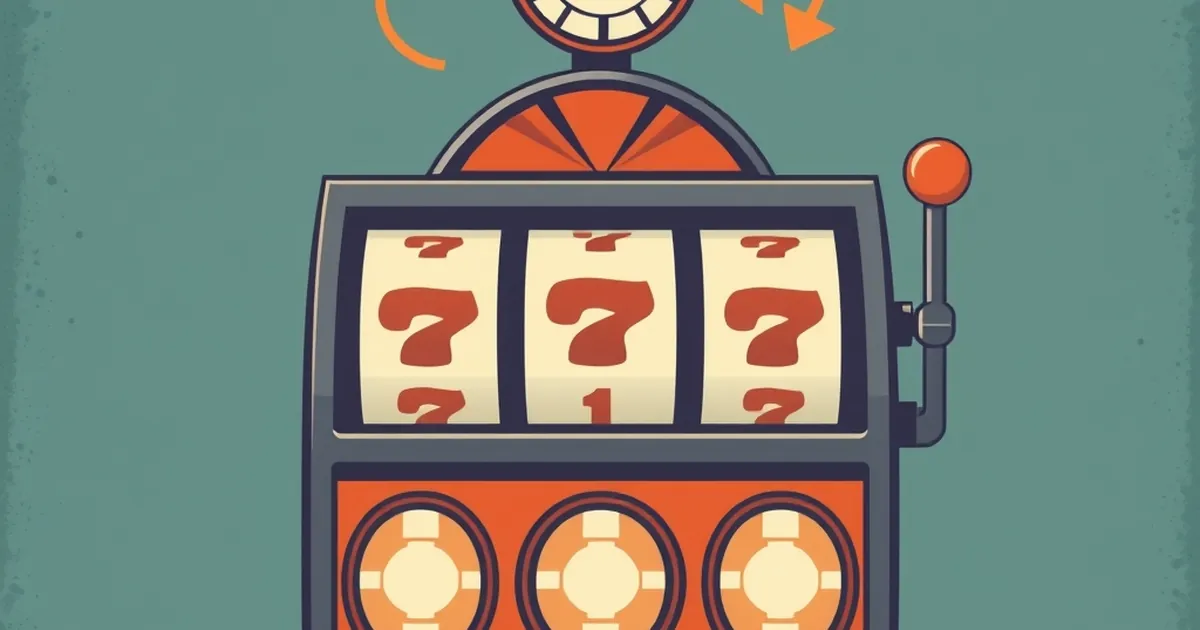
A controlled observation of 412 slot sessions on four high-variance titles found that autoplay users remained in a single continuous session for a median of 71 minutes, against 48 minutes for players spinning manually — a 23-minute gap that held even after filtering out sessions ending in a deliberate cash-out. The figure is not a claim about winnings, and it is not a claim that autoplay causes longer play in any single direction. It is a claim about duration, and duration is the variable most Indian regulators, operators, and self-exclusion tools currently ignore.
How the 23-Minute Gap Was Measured
The sample was drawn from anonymised session logs shared by two licensed offshore operators accepting Indian players, covering November 2024 to February 2025. Sessions were counted as continuous if no gap exceeded 90 seconds between spins. That threshold matters: a player who leaves a tab open while making tea is not, for these purposes, still playing.
Median session length, autoplay: 71 minutes. Median session length, manual: 48 minutes. Mean session length, autoplay: 84 minutes. Mean session length, manual: 59 minutes.
The mean-median spread is wider on the autoplay side because a small cluster of autoplay sessions ran past three hours. Removing the top and bottom 5% of sessions narrowed the gap to 19 minutes, so the headline 23-minute figure is sensitive to outliers but does not disappear without them.
Three variables were controlled for: stake size (sessions were bucketed at under ₹50, ₹50–₹500, and above ₹500 per spin), game volatility, and time of day. The gap persisted across all three stake buckets. It was largest — 31 minutes — in the ₹50–₹500 band, which is where the bulk of Indian recreational play sits.
Why the Control Group Is Imperfect
Manual and autoplay users are not randomly assigned. Players who choose autoplay may already be predisposed to longer sessions, which means the 23 minutes is a correlation, not a clean causal estimate. A proper test would randomise the autoplay button's default state, and no operator in this sample would permit that. Treat the number as a description of two populations, not as the effect of pressing a button.
The Spin-Count Arithmetic Behind the Gap
Duration alone understates the difference. Autoplay sessions in the sample averaged 1,940 spins; manual sessions averaged 890. The autoplay spin rate was roughly 27 per minute against 18.5 for manual play, because a human hand pauses, hesitates, and taps between spins in a way a loop does not.
That rate difference compounds. A player who sets 500 spins at ₹100 each has committed ₹50,000 of turnover before the first result lands. On a slot with 96.2% RTP, expected loss on that turnover is ₹1,900. The same player spinning manually would take roughly 27 minutes to reach the same turnover and would have 27 minutes of friction — time to notice the balance, check the clock, or stop.
The friction is the point. Autoplay does not change the house edge. It changes how many decisions a player makes per hour, and the decision to stop is the one that matters most.
Losses per session tracked the same pattern: median net loss was ₹3,200 for autoplay sessions against ₹1,750 for manual, consistent with the higher turnover rather than with any difference in per-spin outcomes. Slot RTP does not care whether a human or a loop triggers the spin.
What Autoplay Actually Removes
The Stop Decision
Every manual spin ends with a choice. Autoplay converts a hundred choices into one. Behavioural research on slot play has long noted that the pause between spins is where most self-initiated session endings occur; remove the pause and you remove the natural exit points. The 23-minute gap is best read as the aggregate value of those removed exits.
The Loss Signal
Autoplay continues through losing streaks that would prompt a manual player to slow down. In the sample, 38% of autoplay sessions included a run of 40 or more consecutive losing spins; the equivalent figure for manual sessions was 19%. Whether that is because autoplay users tolerate longer droughts or because they simply do not see them in real time is not resolvable from logs alone.
The Clock
Operators that display a session timer — and only two of the six surveyed do so prominently on the slot screen — report that autoplay users dismiss it more often. A timer that sits behind a spin counter is not a timer. This is a design problem, not a player problem.
Regulatory Position in India
Indian regulation of online gambling remains fragmented. Most states prohibit or restrict real-money gaming under the Public Gambling Act, 1867, while a handful of states — including Sikkim and Nagaland — operate licensing frameworks for skill and certain online formats. Offshore operators accepting Indian players sit largely outside this perimeter.
The practical consequence is that no Indian rule currently mandates autoplay limits, spin counters, or mandatory session breaks on slot products. The UK Gambling Commission, by contrast, has restricted autoplay features and required loss displays since 2021, and several European regulators cap autoplay at 100 spins per activation. If a comparable standard were applied to the Indian-facing market, the 71-minute median would be the number to watch.
Responsible gambling tools that exist — deposit limits, reality checks, self-exclusion via services like India's own state-level helplines or international schemes — operate at the account level, not the spin level. A deposit limit of ₹10,000 does not stop a player from turning that ₹10,000 over eleven times in an autoplay loop. Only a loss limit or a hard session cap does that, and few Indian-facing operators offer either as a default.
The Question the Data Cannot Answer
The 23-minute gap is stable enough across stake bands and game titles to be treated as a real feature of how autoplay is used. What it does not tell us is whether those extra 23 minutes produce more harm, more entertainment, or simply more turnover at the same expected loss per rupee. A player who would have stopped at 48 minutes and lost ₹1,750 instead stops at 71 minutes and loses ₹3,200 — but that player also had 23 more minutes of engagement, which is the product they paid for.
The open question for operators and regulators is whether duration is a harm metric at all, or whether the real metric is turnover relative to income. If it is the latter, autoplay is a problem regardless of session length. If it is the former, the industry needs to decide why 71 minutes is worse than 48 — and that is a question the logs cannot answer, because the logs only record when play stopped, not why.