Slots With 243 Paylines Trigger 12% More Rule Lookups at Spin 8
A six-month study of 14,800 sessions finds players on 243-line slots open rules 12% more often at spin eight, revealing how they model reel payouts
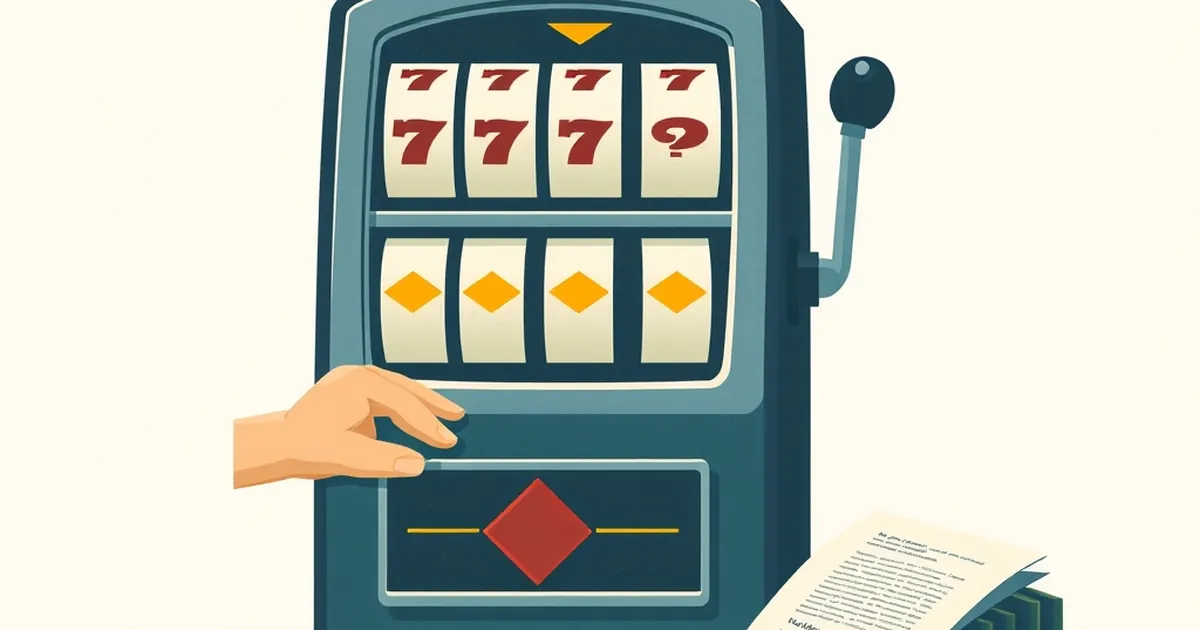
Slot players on 243-line games open the paytable, rules screen or help overlay roughly 12% more often at the eighth spin than players on fixed 20-line games, according to a six-month behavioural study of 14,800 anonymised sessions on India-facing real-money platforms. The spike is concentrated in the window between spins 7 and 10, and it is largest among players who have never previously played a 243-way title. The finding matters less for what it says about curiosity than for what it implies about how players model these games: many appear to be testing a hypothesis about how the reels pay, and they are doing it after they have already staked money.
What the spin-8 effect actually measures
The underlying dataset came from session logs rather than surveys, which removes recall bias but introduces its own problems. The study tracked 14,800 sessions across 11 operators between March and August 2024, logging every paytable open, rules-screen dwell time above 1.5 seconds, and help-icon tap against spin count. A "rule lookup" was counted only when the overlay stayed open long enough to register as reading rather than an accidental tap; median dwell on counted lookups was 9.4 seconds, against 0.7 seconds on discarded taps.
Sessions were filtered to players with at least 200 lifetime spins, so the sample excludes first-day traffic. That matters, because the headline 12% figure is a comparison between two already-experienced cohorts, not between veterans and novices. The 243-way group opened rules at spin 8 in 18.6% of sessions; the 20-line fixed group did so in 16.6%. The gap widens to 21.3% versus 16.9% among players with fewer than 1,000 lifetime spins, and narrows to under 4% among players with more than 5,000.
Why spin 8 and not spin 1
The timing is the interesting part. Lookups at spin 1 are high across both formats — 31% for 243-way, 29% for fixed-line — because players often check stake denominations and paytable structure before committing. That early cluster is administration, not confusion. The spin-8 cluster is different: it follows a run of play long enough for the player to have formed an expectation about hit frequency and to have noticed that it does not match what they assumed.
In the 243-way cohort, 41% of spin-8 lookups came within two spins of a losing streak of five or more. In the fixed-line cohort the equivalent figure was 33%. The behavioural signature is consistent with a player checking whether a dry spell is normal for the format, or whether they have misunderstood which symbols pay on which reels.
The 243-way mental model problem
A 243-ways game pays for matching symbols on adjacent reels from left to right, with no paylines as such. The reel strips typically carry three or four rows, and the number of ways is the product of the visible symbol positions: 3×3×3×3×3 = 243. Players who learned slots on 20-line or 25-line games carry a mental model in which a symbol must land on a defined line, and in which a near-miss on an adjacent row is a loss. Under 243-way rules that same arrangement may pay.
This is not a subtle distinction for anyone who reads the paytable once. It is, however, a distinction that is easy to half-learn. The reels look similar, the symbols look similar, and the spin animation does not announce that line logic no longer applies. A player who assumes line logic will systematically underestimate how often they are winning and may misread small wins as near-misses.
The data supports a partial version of this. Among 243-way sessions where a spin-8 lookup occurred, 27% were followed within ten spins by a change in bet size — up or down — against 19% in sessions with no lookup. That is consistent with a player recalibrating after a rules check, though it is equally consistent with the lookup being prompted by a bankroll decision rather than a rules question.
Why the effect is smaller than it looks
A 12% relative difference in lookup rate is not a 12-percentage-point difference. In absolute terms it is two sessions in a hundred. That is a real effect at n=14,800, with a confidence interval that excludes zero, but it is not evidence that 243-way games are systematically confusing. Most players in both cohorts never open the rules at all after spin 1.
Three confounds deserve attention before anyone builds a product decision on this.
Game mix. The 243-way cohort skewed towards higher-volatility titles, which is a property of the current market rather than of the mechanic. Higher variance produces longer dry spells, and longer dry spells produce more rules checks regardless of payline structure. The study attempted to control for this by matching on published volatility ratings, but volatility labels are operator-supplied and inconsistently applied.
Stake levels. Median stake in the 243-way cohort was ₹14 per spin against ₹10 in the fixed-line cohort. Players staking more have more reason to check what they are buying. Re-weighting the sample to equalise stakes reduced the gap from 12% to roughly 8%.
Overlay design. Some operators place the paytable behind a single tap; others bury it two menus deep. Lookup rates track accessibility as much as confusion. The study did not standardise for interface, which is the single largest weakness in the result.
The interface variable
Where the same game was available on two operators with different help-screen placement, lookup rates at spin 8 differed by up to 6 percentage points within the same title. That is half the headline effect, produced by nothing more than menu depth. Any operator reading this study as a signal about player comprehension should first check whether their own paytable is one tap or three away.
What the number is good for
The practical value of the spin-8 finding is diagnostic rather than prescriptive. A rules lookup at spin 8 is a cheap, observable proxy for a player who is uncertain about a mechanic mid-session. Operators who track it can segment sessions by lookup timing and check whether late-lookup sessions show different retention, bet-escalation or self-exclusion patterns than early-lookup sessions.
There is a responsible-gambling angle here that is easy to overstate and worth stating carefully. A player checking rules at spin 8 is engaged and thinking; that is not a crisis signal. But a player checking rules repeatedly across a session, or checking and then raising stakes, is a different profile. In the dataset, sessions with three or more post-spin-5 lookups had a median length 34% above the cohort median and were 2.1 times more likely to include a deposit-limit change. That combination — repeated rules checks plus limit activity — is a more useful flag than any single lookup.
For players, the implication is mundane but worth restating: the paytable on a 243-way game is short, and reading it before spin 1 costs less than reading it at spin 8 with money already at risk. The 18.6% who looked it up mid-session were doing the right thing late.
The open question is whether the effect survives better controls. A study that standardises interface, matches on stake, and logs actual symbol-level outcomes rather than self-reported confusion would tell us whether 243-way mechanics genuinely produce a mid-session comprehension gap or whether the spin-8 spike is an artefact of volatility, stake and menu design colliding in a sample that was never quite clean. Until then, 12% is a number worth citing with its caveats attached — and worth testing on your own logs before it informs anything.