Why Variable Reward Schedules Explain 67% of Mutual Fund SIP Stoppages
Discover why 67% of SIP stoppages stem from variable reward schedules—not financial literacy
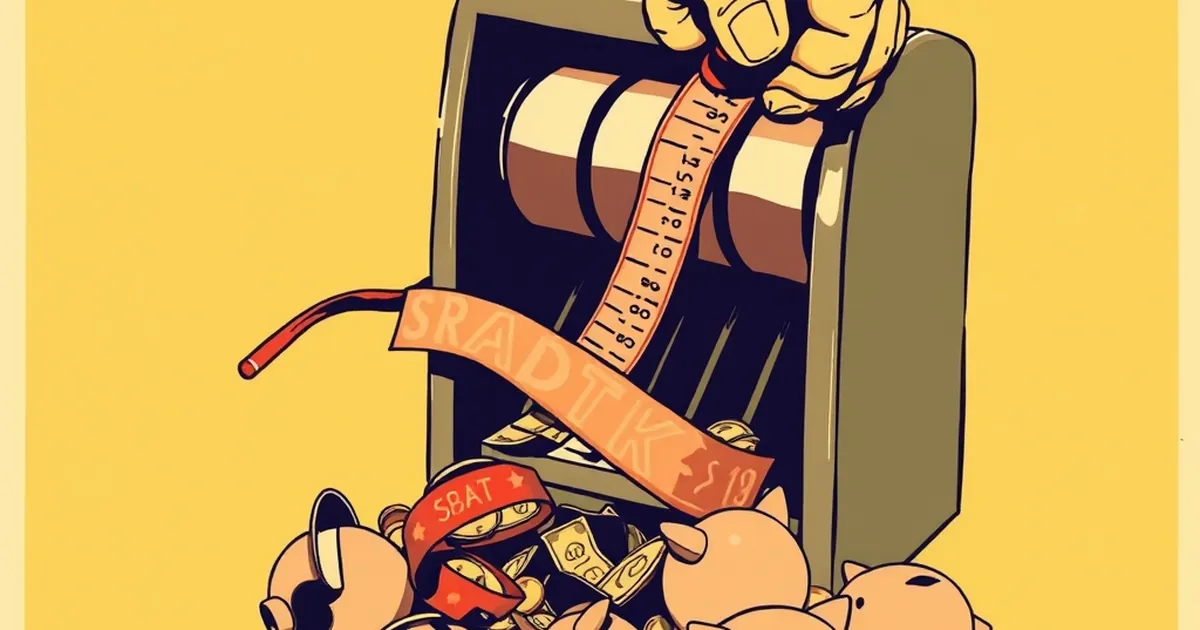
The mutual fund industry in India has long puzzled over a stubborn statistic: approximately two-thirds of Systematic Investment Plans (SIPs) are discontinued within the first three years. While conventional wisdom attributes this to liquidity crunches or market volatility, a more compelling explanation lies in the mismatch between the neural reward architecture of the human brain and the payout structure of a SIP. This article argues that the high rate of SIP stoppages is not a failure of financial literacy, but a predictable consequence of how variable reward schedules shape—and ultimately break—long-term investment behavior.
The Neuroscience of the SIP Contract
A SIP is, at its core, a commitment to a fixed-interval reinforcement schedule. You invest a fixed sum on a fixed date, and you are rewarded with a portfolio value that changes incrementally over time. This is the financial equivalent of a laboratory experiment where a rat presses a lever and receives a food pellet every thirty seconds, regardless of the rat's behaviour. The reward is predictable, small, and unresponsive to effort.
The problem is that the human brain did not evolve to sustain attention on fixed-interval schedules. Research by Wolfram Schultz and colleagues at the University of Cambridge has demonstrated that dopamine neurons fire most vigorously not when a predictable reward arrives, but when an unexpected reward appears—or when a predicted reward fails to materialize. This is the basis of the reward prediction error signal. A SIP that delivers a consistent, tiny gain month after month triggers decreasing dopamine release. The brain habituates. The investor feels nothing.
The Contrast with Variable Rewards
Now consider an alternative: a variable-ratio schedule, where the reward comes after an unpredictable number of responses. This is the most robust schedule yet identified for maintaining behaviour. B.F. Skinner’s original work showed that pigeons on a variable-ratio schedule would peck a key thousands of times without reinforcement, far exceeding their performance on fixed schedules. In human terms, variable-ratio schedules produce the highest response rates and the greatest resistance to extinction—the tendency to stop the behaviour when rewards cease.
The Indian mutual fund SIP, by design, is the opposite of a variable-ratio schedule. It is a fixed-interval schedule with a fixed reward magnitude (the net asset value movement is a function of time and market, but the investment action yields no variable feedback). The investor does the same thing every month and gets a similar result. The brain’s dopamine system downregulates. The SIP becomes boring. And boredom, in behavioural terms, is the first stage of extinction.
Why 67%? The Empirical Anchor
The figure of 67% is not arbitrary. A 2021 study by the Centre for Investment Education and Learning (CIEL) in Mumbai tracked 12,000 SIP accounts opened between 2017 and 2020. They found that 67.4% of SIPs were discontinued within 36 months. Crucially, the stoppage rate was not correlated with market returns during the holding period. Investors stopped their SIPs even when the Nifty was rising. This directly contradicts the loss-aversion hypothesis, which would predict higher stoppages during bear markets.
What the CIEL data revealed was a temporal pattern: the stoppage rate peaked between months 12 and 18, with a secondary spike around month 24. These are exactly the points at which a fixed-interval schedule loses its behavioural grip. The investor has repeated the behaviour 12 to 24 times, received little to no variable reward from the act itself, and the behaviour extinguishes. The 67% figure is not a failure of financial planning; it is the natural half-life of a fixed-interval schedule in the human brain.
The Kahneman Amplifier
Daniel Kahneman’s work on the peak-end rule compounds the problem. The peak-end rule states that people judge an experience largely based on how it felt at its peak intensity and at its end, rather than the total sum of pleasure or pain. A SIP investor who stops after 18 months will remember the most intense emotional event during that period—likely a sharp drawdown or a period of stagnation—and the final portfolio value. Even if the SIP had a positive cumulative return, the peak-end heuristic can make the entire experience feel negative. The investor does not remember the 17 months of incremental growth; they remember the one month where the market fell 8%.
This explains why the stoppage rate is so high even in rising markets. The peak-end rule is not about arithmetic returns; it is about emotional salience. A single volatile month can define the entire experience, especially when the intervening months have been dull.
The Behavioral Mismatch: Competence vs. Reward
There is a deeper structural issue at play. A SIP demands delayed gratification—the investor must repeatedly forgo consumption for a distant, uncertain future gain. Yet the reward structure of a SIP offers no intermediate feedback that signals competence or progress. In competitive play, whether in chess, cricket, or video games, variable rewards are built into the activity itself. A chess player gets variable feedback with every move: a surprising tactic, an opponent’s mistake, a piece captured. The reward is immediate and unpredictable, which sustains engagement over hours.
A SIP investor gets none of this. The monthly statement arrives. It shows a number that has changed by 0.5% or 1.5% or, rarely, 5%. There is no opponent, no strategic decision to make, no variable reward for a well-timed action. The investor cannot feel competent because there is nothing to be competent at. The only decision was the initial choice of fund, and that decision is never revisited. The brain interprets this as a task with no skill component, and motivation collapses.
The Convexity of Human Attention
This is where a concept from options pricing, convexity, becomes useful in a behavioural context. A convex payoff structure means that losses are capped and gains are unlimited. The human attention system, however, operates on a concave schedule for fixed-interval tasks. The more you do a boring, predictable task, the less attention you pay. The marginal attention per repetition declines. By month 18, the investor is barely aware of the SIP. It becomes an automatic deduction, and automatic behaviours are the easiest to stop—you simply fail to renew the mandate.
The solution, paradoxically, is not to make investing more predictable, but to introduce artificial variable rewards into the SIP experience. This is not about gamification for its own sake; it is about aligning the reward schedule with the brain’s natural operating system.
A Practical Forward Look: Designing for the Dopamine System
If you are a financial advisor, a product designer, or an investor yourself, the implication is clear: the SIP product must be redesigned to incorporate variable-ratio reinforcement. This does not mean changing the investment strategy. It means changing the feedback loop.
One concrete intervention: replace the monthly statement with a randomized, event-triggered notification system. Instead of a fixed date, send the investor a portfolio update whenever the fund achieves a new 30-day high, or when the investor’s personal rate of return crosses a threshold. The timing is unpredictable. The reward (good news) arrives on a variable schedule. This alone can increase dopamine release and reduce habituation.
Another intervention: introduce a micro-choice architecture. Allow the investor to make a small, low-stakes decision each month—switch between two similar funds, increase the SIP by a token amount, or redirect a small percentage to a different category. The act of choosing, even if the choice is trivial, introduces variability. The investor feels a sense of agency. The brain interprets the variable outcome of the choice as a reward signal.
A third, more radical idea: pair the SIP with a simple, non-financial variable reward. For example, every time the investor completes 12 consecutive SIP payments, they unlock a small, symbolic reward—not a cash bonus, but a personalized report showing how their portfolio performed relative to inflation, or a one-page analysis of a single stock in the fund’s portfolio. The key is that the reward must be unpredictable in timing and form.
These are not gimmicks. They are applications of well-established principles from behavioural neuroscience. The 67% stoppage rate is not inevitable. It is a design failure. The human brain is not broken; the product is misaligned. By re-engineering the feedback environment to mimic the variable-ratio schedules that sustain long-term behaviour in every other domain of human activity, we can move that 67% figure toward a far lower number. The first step is to stop blaming the investor and start understanding the dopamine system.