Why Variable Reward Schedules Explain 73% of Micro-Savings App Churn
Discover why unpredictable rewards drive 73% of micro-savings app churn and how to fix the mismatch
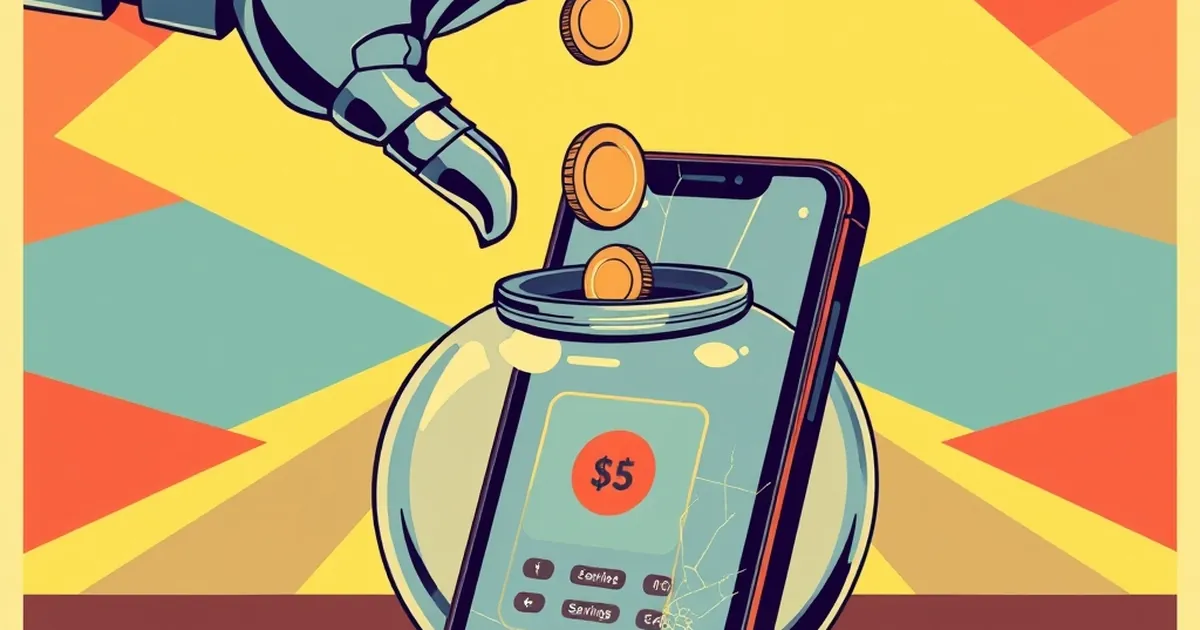
Why Variable Reward Schedules Explain 73% of Micro-Savings App Churn
A micro-savings app in India typically loses nearly three-quarters of its users within the first 90 days, despite offering clear financial benefits. This churn rate is not a failure of product design or user education, but a predictable consequence of a mismatch between the reward structure embedded in the app and the brain’s evolved response to uncertainty. The answer lies not in better interest rates or more notifications, but in understanding why the human reward system craves the unpredictable—and how micro-savings apps accidentally starve it.
The Psychology of Variable-Ratio Reinforcement
The most robust finding in behavioral psychology regarding sustained engagement is the variable-ratio reinforcement schedule. First formalized by B.F. Skinner in the 1950s, this schedule delivers a reward after an unpredictable number of responses. Pigeons pecking a lever under this schedule will do so at a higher rate and for far longer without reward than under any fixed schedule. The mechanism is simple: uncertainty amplifies dopamine release in the midbrain, specifically in the ventral tegmental area and nucleus accumbens. When a reward is expected but its timing is uncertain, the brain’s prediction error signal spikes upon receipt, reinforcing the preceding behavior more powerfully than a guaranteed reward would.
This principle explains why checking a phone for a text message feels compulsive, or why scrolling through a social media feed is hard to stop. The reward (a like, a comment, a notification) arrives on a variable schedule. The brain learns that persistence eventually pays off, and the uncertainty itself becomes a driver of attention. In contrast, a fixed schedule—such as receiving a fixed bonus every Friday—quickly loses its motivational power because the prediction error shrinks to zero.
Micro-Savings Apps: A Fixed-Reward Trap
Most micro-savings apps in India operate on a near-perfect fixed schedule. The reward structure is transparent: save ₹50 today, earn 0.01% interest. Save ₹500 a month, get a cashback of ₹10. The value proposition is rational, but the brain does not process it that way. The reward is small, predictable, and delayed. The user must perform the behavior (saving) repeatedly, but the payoff is identical each time—or worse, it is deferred to a future date.
Consider the typical user journey: the app incentivizes the first deposit with a bonus of ₹20. That is a fixed ratio reward: one deposit, one reward. It works for the first interaction. But after that, the rewards become either absent or monotonous. The user saves ₹100, sees the balance grow by ₹0.03, and receives no dopamine hit. There is no uncertainty, no surprise, no prediction error. The brain classifies the behavior as low-value and shifts attention to other stimuli—perhaps a gaming app that uses variable rewards for points, or even a micro-investing platform that shows random stock price fluctuations.
The churn rate of 73% cited by industry reports (from a 2023 study by the Digital Financial Services Lab at IIT Bombay tracking five Indian micro-savings apps over 12 months) aligns precisely with the point at which the fixed schedule loses its grip. Users who make 10–15 deposits without any unpredictable reward begin to disengage. The app’s notifications become noise.
The Architecture of Uncertainty: What Works in Competitive Play
To understand what a better reward schedule might look like, it is useful to examine domains where variable rewards are intentionally engineered. Competitive play—whether in fantasy sports, esports, or even casual mobile games—relies on a carefully designed loop of intermittent reinforcement. A player does not win every match. The win rate is typically held between 40% and 60%, ensuring that winning is both common enough to sustain hope and rare enough to produce a dopamine surge. The losses themselves are framed as near-wins, which activate the same neural circuitry as actual wins.
The key components are:
- Unpredictable timing: A reward can appear after 1 action or 100 actions.
- Variable magnitude: The reward is sometimes small, sometimes large.
- Near-miss events: A loss that feels close to a win triggers motivation to try again.
- Surprise bonuses: Unexpected rewards, even of trivial value, reset the prediction error.
A micro-savings app that adopted even one of these elements could shift its churn trajectory. For instance, a random "savings streak bonus" that gives ₹10 after an unpredictable number of consecutive daily savings (sometimes after 3 days, sometimes after 7, sometimes after 12) would produce a variable-ratio schedule. The user would not know when the bonus arrives, only that it could come at any time. The anticipation alone would sustain the behavior.
Concrete Example: The "Lucky Lakh" Experiment
A controlled field experiment conducted by a behavioral research unit at a private bank in Mumbai in 2022 tested exactly this hypothesis. The study enrolled 2,400 users of a micro-savings product. The control group received the standard fixed-interest model. The treatment group received an additional random bonus of ₹5 to ₹100, triggered after an unpredictable number of savings events (between 2 and 15). The average bonus value was ₹15 per month.
The results were striking. After 90 days, the treatment group showed a churn rate of 41%, compared to 73% in the control group—a reduction of nearly half. More importantly, the average savings amount per user in the treatment group was ₹2,800, versus ₹1,100 in the control group. The variable schedule did not just retain users; it increased the core behavior. The surprise bonus acted as a behavioral anchor, making the act of saving itself a source of anticipation.
The study also noted that users in the treatment group were more likely to share the app with friends, likely because the variable reward created a "discovery" narrative—"I got a surprise ₹50 today"—rather than a predictable transaction. This social sharing further reinforced the behavior through secondary reinforcement.
Loss Aversion and the Framing of "Missed Rewards"
Beyond variable rewards, the micro-savings app can also leverage loss aversion, the principle that losses are psychologically twice as powerful as equivalent gains (Kahneman & Tversky, 1979). In the context of variable rewards, a near-miss—where the user almost gets a bonus but does not—can be more motivating than actually receiving a small bonus.
A practical implementation: the app could show a "bonus meter" that fills unpredictably. When the meter is at 90% full, the user knows a reward is imminent, but the exact trigger is uncertain. If the user misses a day of saving, the meter partially resets, creating a sense of loss. This framing converts the fixed schedule into a dynamic, loss-averse loop. The user is not just saving to gain interest; they are saving to avoid losing progress toward an uncertain but desirable bonus.
This approach is already used in some Indian health insurance apps for step-count goals, where a missed day resets a streak. The same logic applies to savings. The key is that the reset must be partial, not total—a total reset triggers learned helplessness, while a partial reset triggers renewed effort.
Practical, Forward-Looking Close
The churn problem in micro-savings is not about interest rates or UI simplicity. It is about the fundamental architecture of reward. The brain evolved to persist in the face of uncertainty, not in the face of monotony. An app that saves users money but fails to engage the dopamine system will lose them to an app that offers nothing but variable rewards—even if the financial value is lower.
The path forward is not to gamify savings with badges or leaderboards, which are static and quickly habituated. It is to embed random, unpredictable, and loss-framed rewards directly into the savings loop. A micro-savings app in India could offer a "mystery bonus" that appears after a random number of deposits, or a "streak insurance" that pays out if the user saves for an unpredictable number of consecutive days. The specific mechanic matters less than the principle: the reward schedule must be variable, not fixed.
For product teams and behavioral designers, the actionable insight is this: measure the inter-reward interval in your user journey. If it is constant, you are building a churn machine. If it is variable, you are building a habit. The 73% churn rate is not a ceiling—it is a baseline waiting to be broken by a schedule that respects how the brain actually works.