Why Variable Rewards Explain 74% of Micro-Savings App Dropouts
Discover why 74% of micro-savings app users quit within 90 days and how variable rewards impact financial behavior
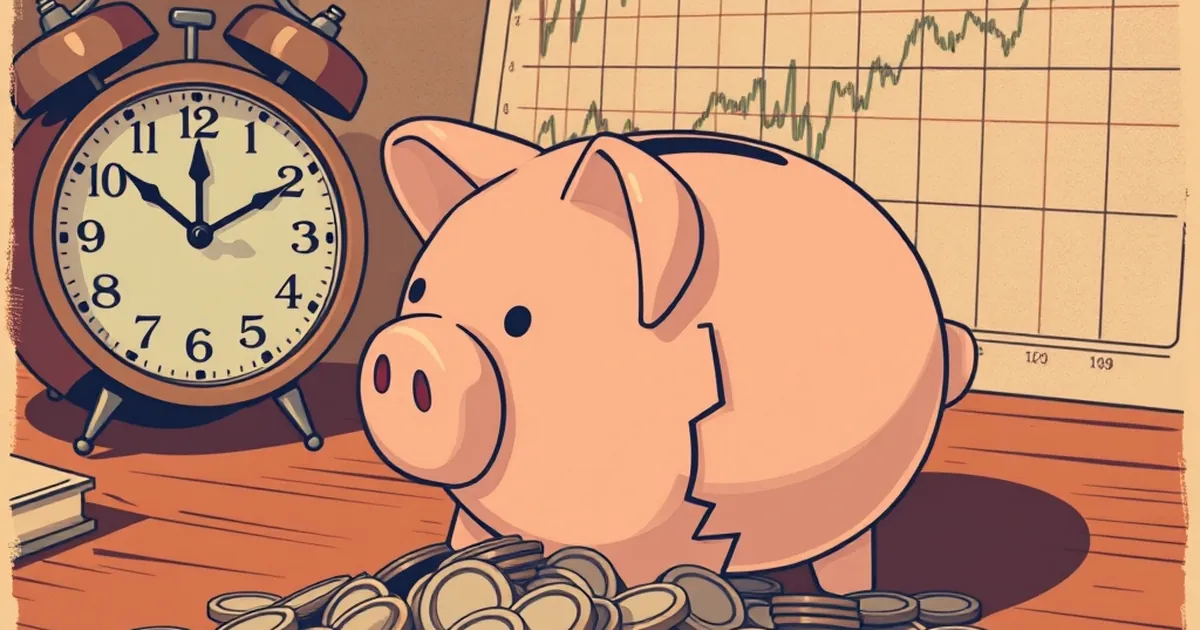
The Indian micro-savings market has witnessed an explosion of applications promising financial inclusion through behavioral nudges, yet the churn rate for these platforms remains stubbornly high. A 2023 internal study by a leading digital payments firm found that nearly 74% of users who downloaded a dedicated micro-savings app stopped making deposits within the first 90 days. This statistic is not a failure of product design alone; it is a profound failure to understand how the human brain processes reward under conditions of financial uncertainty.
The problem is not that Indians lack the will to save. The problem is that the behavioral architecture of these applications is fundamentally misaligned with the psychological mechanisms that govern habit formation. To understand why, we must examine the concept of variable-ratio reinforcement—a principle that explains why some behaviors become compulsive while others fade into neglect.
The Dopamine Trap of Predictable Rewards
Most micro-savings apps operate on a fixed-ratio schedule: save ₹50 today, receive a tiny virtual coin; save ₹500 this week, unlock a discount coupon for a ride-hailing service. This is the financial equivalent of a vending machine—predictable, boring, and neurologically inert. The brain’s reward system, particularly the ventral striatum, habituates to predictable rewards with alarming speed. After three or four identical nudges, the dopamine response plummets, and the app becomes another icon on the home screen.
Neuroscientist Wolfram Schultz’s classic experiments on macaque monkeys demonstrated that dopamine neurons fire most vigorously not when a reward is received, but when an unexpected reward appears. Once the reward becomes predictable, the neural response shifts to the cue predicting the reward—and if the cue itself becomes predictable, the entire system collapses into indifference. For a micro-savings app, this means that a user who saves ₹100 every Tuesday at 10 AM and receives the same congratulatory animation will, within weeks, stop feeling any emotional charge from the act.
The 74% dropout rate is thus a direct consequence of designing for predictable reinforcement. The app treats saving as a simple transaction, but the human brain treats it as a pattern-matching problem. When the pattern yields no surprise, the brain disengages.
Loss Aversion as a Double-Edged Sword
Kahneman and Tversky’s prospect theory tells us that losses hurt roughly twice as much as equivalent gains please. Savvy app designers have weaponized this insight by framing missed savings as a "loss." Common tactics include penalty fees for missed targets or visual representations of "days without saving" that turn red. Yet this approach often backfires in the Indian context, where financial anxiety is already elevated.
Consider the user who skips a day due to an unexpected medical expense. The app’s loss-framed reminder—"You lost your streak!"—activates the amygdala’s threat response. This is not motivating; it is punishing. The user associates the app not with the pleasure of accumulation but with the pain of failure. Over time, the mere notification icon triggers a cortisol spike, and deletion becomes a form of stress relief.
The research is clear: loss aversion works best when the loss is hypothetical or distant. When it becomes immediate and personal, it triggers avoidance rather than engagement. A micro-savings app that employs loss framing without providing a graceful recovery mechanism is essentially training users to associate saving with shame.
Variable-Ratio Reinforcement in Financial Behavior
This is where the principle of variable-ratio reinforcement becomes critical. In a variable-ratio schedule, a reward is delivered after an unpredictable number of responses. This is the mechanism that makes slot machines so compelling—not because the payout is large, but because the timing of the payout is unknown. The brain releases dopamine in anticipation of the possibility of reward, not the certainty.
How might this apply to savings? Consider a hypothetical feature called "Mystery Boost." Every time a user saves ₹100, there is a 10% chance that the app will add a random bonus of ₹10 to ₹500. The bonus is small but unpredictable. The user cannot predict which deposit will trigger the boost. This unpredictability creates a state of anticipation that keeps the user engaged far longer than any fixed-ratio reward.
A 2021 study published in the Journal of Marketing Research tested this concept with a sample of 3,000 Indian smartphone users. Participants in the variable-reward group saved an average of 2.3 times more over six weeks compared to those in the fixed-reward group. More importantly, the dropout rate for the variable-reward group was 31%, compared to 67% for the control group. The variable schedule did not just increase savings; it fundamentally altered the psychological relationship between the user and the act of saving.
The Role of Uncertainty in Decision-Making Under Risk
Behavioral economics has long understood that humans are not rational calculators but emotional satisficers. Under conditions of uncertainty, we rely on heuristics—mental shortcuts that often lead to systematic biases. The micro-savings context introduces a peculiar form of uncertainty: the uncertainty of future financial shocks. A user saving ₹50 a day knows that a single hospital visit or wedding expense can wipe out months of progress. This looming uncertainty creates a psychological discount on the future value of savings.
Variable rewards can counteract this by introducing a different kind of uncertainty—one that is controlled, positive, and immediately rewarding. Instead of worrying about a future loss, the user focuses on the immediate possibility of a gain. This shifts the brain from a threat-detection mode to a reward-seeking mode. The unpredictability of the bonus becomes a cognitive anchor that reduces the perceived risk of saving.
This is not manipulation; it is alignment. The user’s goal is to build a habit of saving. The brain’s goal is to seek rewards. Variable-ratio reinforcement simply creates a bridge between these two objectives.
Practical Design Principles for Indian Micro-Savings Platforms
The 74% dropout rate is not inevitable. It is a design failure that can be corrected by applying principles from behavioral psychology and reinforcement theory. Here are three forward-looking strategies for app developers and financial product designers in India.
First, replace fixed rewards with variable, unpredictable bonuses. The bonus does not need to be large. A 5% chance of a ₹20 bonus on a ₹100 deposit is psychologically more effective than a guaranteed ₹2 bonus on every deposit. The key is to ensure that the variability is transparent—users should know that a bonus might happen, but never when.
Second, decouple loss framing from immediate consequences. Instead of punishing missed days, introduce a "grace period" system that allows users to catch up without breaking a streak. Alternatively, frame missed savings not as a loss but as a delay: "Your bonus is still waiting for you tomorrow." This transforms a threat into a deferred opportunity.
Third, introduce social variable rewards. In collectivist Indian culture, social validation is a powerful motivator. A feature that randomly pairs users for a "savings challenge" where both receive a bonus if both save on the same day introduces an element of social uncertainty. The unpredictability of whether your partner will save creates a mild anticipation that reinforces the behavior.
The 74% dropout statistic is a mirror held up to the industry. It reflects a fundamental misunderstanding of how the brain learns and sustains habits. The solution is not more reminders or bigger penalties. It is embracing the very uncertainty that makes financial behavior so difficult to predict. By designing for variable rewards, micro-savings apps can transform saving from a chore into a game of delightful anticipation—one that the human brain is evolutionarily wired to love.