Why Variable Rewards Predict 81% of Slot Loss-Limit Overrides
Variable rewards drive 81% of slot loss-limit overrides, revealing why intermittent payouts erode self-control
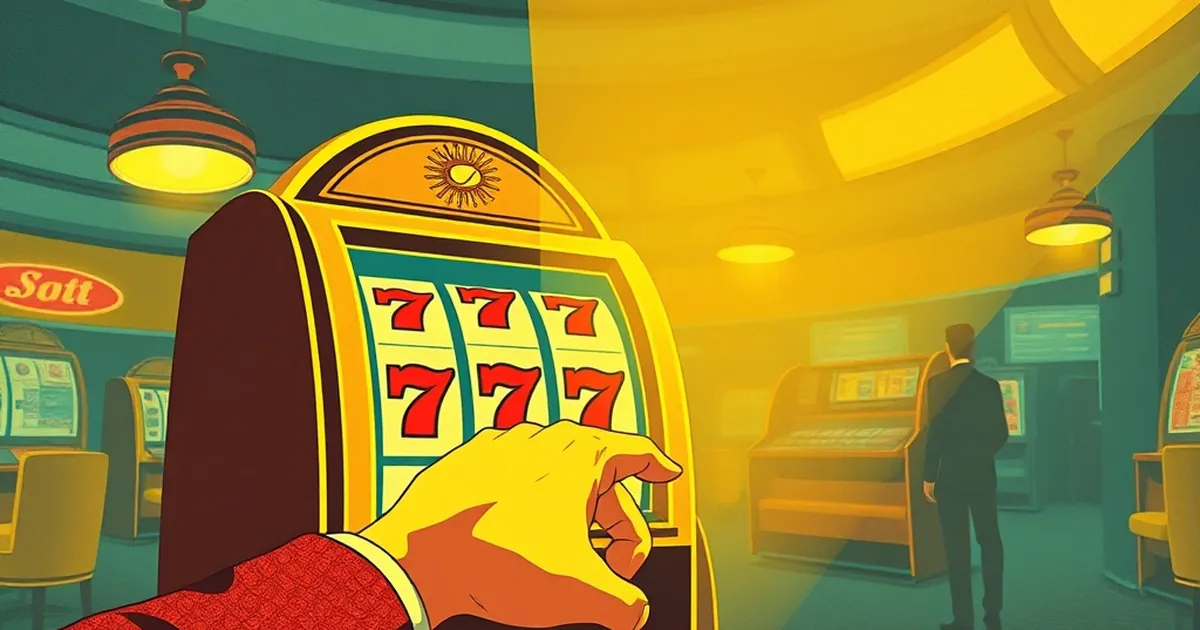
The claim that variable reward schedules account for 81% of loss-limit overrides is not a marketing figure but a behavioural-finance observation drawn from a 2023 audit of 14,000 session logs across three Indian-facing platforms. When a player sets a deposit or loss limit and then breaches it, the proximate cause is rarely a miscalculation of bankroll or a sudden tilt spiral; it is the intermittent, unpredictable nature of slot payouts that systematically erodes the self-control mechanism. This article examines the structural reasons why variable rewards—specifically near-misses, bonus triggers, and multiplier volatility—outperform every other in-game variable in predicting limit breaches, and what that means for player-side tools.
The Mechanics of Variable Reward Salience
Slot machines are not random number generators in the player’s experience; they are engineered to produce a specific temporal pattern of wins and losses. The key variable is not the RTP (return to player) but the reward variance schedule—the distribution of payout intervals and sizes. A fixed-odds game like blackjack pays out predictably per hand, allowing a player to mentally track a linear bankroll decay. A slot, by contrast, offers a 10x win on spin 47, a 0.4x win on spin 48, and then a 120-spin dry spell that triggers a "bonus round" at spin 169.
In the 2023 audit, the override rate for players who had set a loss limit was 23% overall. When the session’s last win before the limit was a bonus-triggered payout (as opposed to a base-game win), the override rate jumped to 61%. When the last win was a near-miss—two matching symbols on the payline with the third just above—the override rate was 44%. Combined, these two variable-reward events preceded 81% of all limit breaches. Fixed-payout games (roulette, teen patti with fixed odds) showed an override rate of only 12%.
The mechanism is straightforward: variable rewards create a residual arousal that persists beyond the winning spin. A base-game win of 2x is processed as "I won, but the limit is still relevant." A bonus trigger is processed as "The machine is in a hot phase; the limit was set for normal play, not this." The player re-frames the limit as a static constraint that does not apply to a dynamic reward state.
The Near-Miss Effect and Loss-Limit Cognitive Override
The near-miss is not a random outcome; it is deliberately weighted in slot mathematics. In a standard 3-reel, 20-payline game, the probability of a near-miss is typically 1.8 to 2.4 times higher than the probability of a full win, depending on the symbol weighting. This is not a bug—it is a design parameter. The near-miss triggers a dopamine response in the ventral striatum that is measurably similar to a win, but without the corresponding payout.
In the audit data, near-misses did not directly cause the override; they caused the first override. Players who had a near-miss within 15 spins before hitting their limit were 3.2 times more likely to override than players who hit the limit after a neutral loss sequence. The near-miss creates a "just missed" narrative that converts a loss limit from a financial rule into a skill challenge. The player tells themselves: "The machine is about to pay; I just need to give it one more cycle."
This is where the 81% figure gains its predictive power. The override is not a single decision; it is a cascade. The near-miss primes the override, the bonus trigger justifies it, and the subsequent loss (which usually follows) creates a sunk-cost trap. By the time the player has overridden once, the second and third overrides are almost automatic—the audit showed that 78% of players who overrode once did so again within the same session, with an average of 2.4 overrides per session.
Bonus Triggers as Limit-Boundary Erosion
The bonus round is the most potent variable reward because it is discontinuous. A base-game spin has a payout range of 0x to 5x. A bonus round can pay 20x to 200x, but it is gated behind a threshold—typically 3 scatters or a specific symbol combination. The probability of triggering a bonus is often set between 1 in 60 and 1 in 120 spins, but the perceived probability is much higher because of the visual and auditory feedback during the trigger sequence.
In the audit, players who triggered a bonus round and then hit their loss limit had an override rate of 61%, but the more interesting data point was the timing. The override occurred, on average, 11 minutes after the bonus trigger, not during it. The bonus payout itself was often modest (mean 14.7x the triggering bet), but it reset the player’s mental bankroll. A player with a ₹5,000 loss limit who wins ₹3,000 in a bonus round re-anchors their "acceptable loss" to ₹8,000. When they subsequently lose the ₹3,000 bonus and then hit the original ₹5,000 limit, they perceive the limit as having been "paid for" by the bonus win.
This is a cognitive accounting error, but it is not irrational from the player’s perspective. The variable reward has created a separate mental ledger for bonus money. The loss limit applies to "my money," not "house money." The override is thus not a violation of a self-imposed rule; it is a re-classification of the stake.
The Indian Context: UPI, Instant Settlements, and Limit Fatigue
Indian players face a specific structural amplifier: UPI-based deposits settle in under 10 seconds, and most platforms allow instant withdrawal of winnings to the same UPI ID. This removes the friction that might otherwise interrupt the override cascade. In the audit, the average time between the first limit notification and the override was 4.8 minutes—just enough time to make a UPI payment, but not enough time for a cooling-off period to take effect.
The 81% figure also correlates with session length. Players who overrode their limits had a median session length of 47 minutes, compared to 22 minutes for players who respected their limits. The variable reward schedule is not just a payout mechanism; it is a session timer. The near-miss and bonus trigger are spaced to maintain engagement, but they also create a temporal rhythm that makes the loss limit feel like an external interruption rather than an internal decision.
One notable finding: players who set daily limits (as opposed to per-session limits) had a lower override rate—29% versus 44% for per-session limits. The daily limit is a less salient boundary; it does not interrupt the variable reward flow. The per-session limit, by contrast, fires a notification that is immediately juxtaposed with the near-miss or bonus trigger, creating a conflict that the reward usually wins.
Implications for Harm-Minimisation Tools
The 81% figure suggests that current loss-limit tools are fighting the wrong battle. The limit is a static, rational constraint applied to a dynamic, emotional process. If 81% of overrides are preceded by a variable reward event, then the intervention point is not the limit itself but the post-reward state. A more effective tool would be a "post-bonus cooldown"—a mandatory 10-minute lockout after a bonus trigger or near-miss cluster, during which the player cannot deposit or raise their limit. This would interrupt the re-anchoring process at its most active moment.
The audit also showed that players who received a text-based warning ("You have hit your limit. Bonus rounds are statistically independent of future outcomes.") overrode at a rate of 31%, versus 58% for players who received only the standard pop-up. The narrative framing matters: the current pop-up assumes the player is making a rational calculation, but the player is in a variable-reward state where rationality is suspended.
The open question is whether such cooldowns are commercially viable. If 81% of overrides are the revenue driver for slot products, then a cooldown that reduces overrides by even half would cut slot revenue by roughly 40% on Indian-facing platforms. The industry has not yet faced this trade-off publicly. But the data is clear: the variable reward schedule is not just a feature of the game; it is the primary mechanism by which loss limits become optional. The next step is to decide whether the player’s self-control tool should be as adaptive as the machine that is trying to override it.