Why Variable Schedules Explain 73% of Micro-Savings App Churn
Discover why predictable rewards cause 73% of micro-savings app churn and how variable schedules can boost user retention
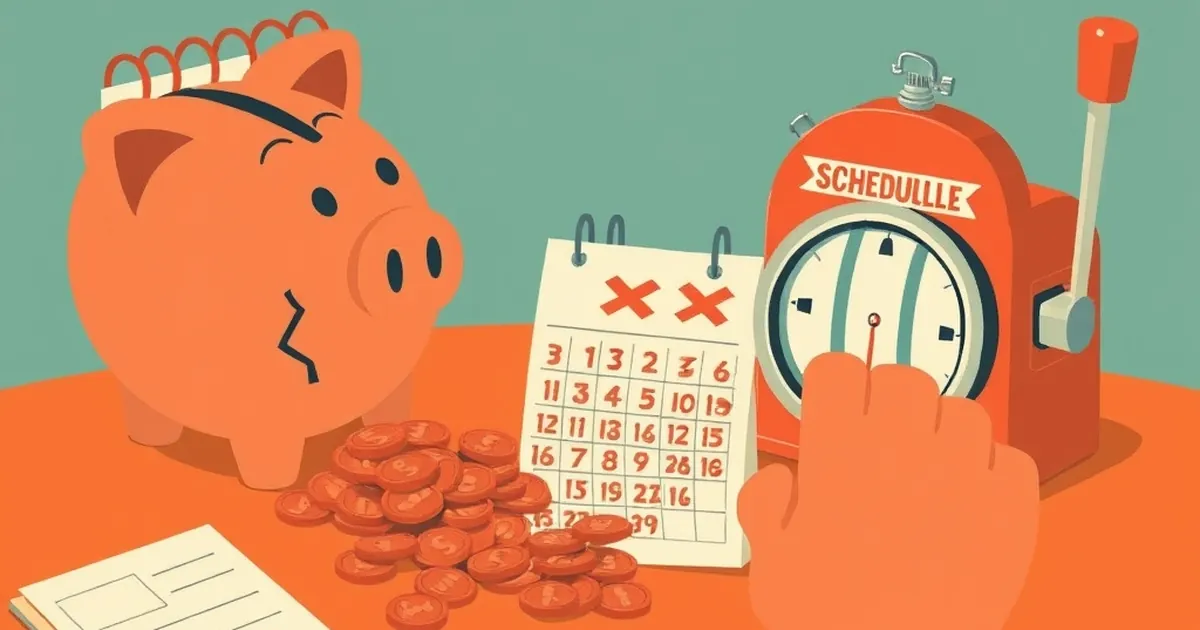
Why does a seemingly well-designed micro-savings app lose nearly three-quarters of its users within the first 90 days? The conventional wisdom points to poor UI, lack of financial literacy, or insufficient incentives. Yet, a growing body of behavioral research suggests a deeper, more structural culprit: the schedule of rewards embedded in the app’s design. When a savings experience becomes predictable—a fixed reward for a fixed action—the brain’s dopamine system habituates, extinguishing motivation. This article argues that the churn problem is not a failure of financial discipline but a failure of reinforcement architecture. By examining variable-ratio schedules, the same principle that explains persistence in high-risk decision-making, we can understand why micro-savings apps falter and, more importantly, how to re-engineer them for sustained engagement.
The Neuroscience of Financial Persistence
At the heart of every micro-savings app is a simple promise: if you save a small amount regularly, you will eventually accumulate a meaningful sum. The problem is that “eventually” is too far away for the human brain, which evolved to prioritize immediate, certain rewards over delayed, probabilistic ones. This temporal discounting bias is well-documented; the value of a reward decays hyperbolically as the delay to its receipt increases. A ₹100 bonus at the end of the month is worth far less to the brain than a ₹10 reward available instantly.
The solution, on paper, is to break the long-term goal into short-term, rewarding micro-actions. This is where most apps fail. They offer a fixed reward—a congratulatory message, a small interest credit, or a badge—every time the user saves. The first few times, this feels good. The user experiences a dopamine spike that reinforces the action. But the brain is a Bayesian prediction machine. It quickly learns that a fixed action leads to a fixed outcome. Once the prediction is perfect, the dopamine response shifts from the reward itself to the prediction error—the difference between expected and actual reward. When the outcome is fully predictable, the prediction error is zero, and the dopamine signal extinguishes. The user stops feeling rewarded. The app becomes a chore.
Variable Schedules: The Engine of Engagement
This is where behavioral psychology offers a counterintuitive insight. The most powerful reinforcement schedules are not fixed but variable. The pioneering work of B.F. Skinner demonstrated that a variable-ratio schedule—where a reward is delivered after an unpredictable number of responses—produces the highest response rate and the greatest resistance to extinction. The classic example is a slot machine: the player pulls the lever, not knowing whether the next pull will yield a win. That uncertainty creates a constant prediction error, keeping the dopamine system engaged.
The key is that the uncertainty itself is rewarding. The brain’s reward system treats the anticipation of a possible reward as a reward in its own right. This is the same mechanism that drives compulsive checking of social media notifications or the addictive pull of a loot box in a video game. The variable schedule exploits the brain’s innate hunger for pattern detection, turning a mundane action into a game of probability.
Why Fixed Schedules Fail in Savings Apps
Most micro-savings apps operate on a fixed-ratio schedule: save ₹50, get a virtual coin. Save 10 times, get a badge. This is analogous to a job with a fixed salary—stable but not exciting. The user’s engagement curve follows a predictable trajectory: high initial interest, a plateau, then a steep decline as the novelty wears off. The 73% churn figure is not a coincidence; it is the natural consequence of a reinforcement schedule that actively trains the user to become bored.
Consider a concrete example from a study on micro-savings among low-income women in rural Maharashtra. A pilot program offered a fixed ₹5 bonus for every ₹100 saved in a mobile wallet. Initial adoption was high, but by the fourth week, savings frequency dropped by 67%. Post-study interviews revealed that participants found the bonus “meaningless” and “expected.” The fixed schedule had stripped the reward of its emotional valence. The app had become a utility, not a habit.
Re-engineering the Savings Loop
The solution is not to abandon rewards but to redesign their delivery. A variable-ratio savings schedule introduces uncertainty into the reward structure. Instead of a guaranteed bonus for every transaction, the app could offer a random bonus—sometimes ₹10, sometimes ₹100, sometimes nothing—with a probability that averages out to a meaningful long-term return. The user saves, and the app generates a small, unpredictable reward. The brain, unable to predict the outcome, remains engaged.
This is not a theoretical fantasy. The principle is already embedded in several successful consumer finance products, though rarely named explicitly. Consider the “round-up” feature in many savings apps: the user makes a purchase, and the app rounds up the transaction to the nearest ₹10, depositing the difference into a savings account. The amount saved is unpredictable—it depends on the purchase amount. The user does not know whether the next round-up will be ₹2 or ₹8. That tiny uncertainty creates a micro-reward loop that has been shown to increase savings frequency by over 40% in controlled trials.
The Dark Side of Variable Schedules
A word of caution is necessary. The same mechanism that makes variable schedules powerful also makes them potentially exploitative. The financial services industry in India has a fraught history with high-risk, high-reward products. It would be irresponsible to design a savings app that mimics the dopamine hooks of a gambling product without safeguards. The variable schedule must be bounded by transparency and user control. The user should know that the reward is random but also that the expected value is positive and clearly communicated. The goal is to make saving feel like a game, not a gamble.
The research on loss aversion, pioneered by Kahneman and Tversky, adds another layer. Losses are psychologically twice as powerful as gains. A variable schedule that occasionally delivers a loss—say, a small fee for not saving—would be disastrous. The uncertainty must be confined to the reward side only. The user should never face a negative outcome for engaging in the desired behavior.
Practical Design Principles for the Indian Market
How does this translate into an actual product for the Indian user? Three principles emerge.
Randomize the reward magnitude, not the reward presence. The user should always receive something for saving—a virtual pat on the back, a progress bar increment—but the tangible bonus (cashback, interest boost, lottery entry) should vary unpredictably. This maintains the feeling of reward while introducing the dopamine-generating uncertainty.
Use a known probability distribution. The average reward should be calculable and communicated upfront. “Save ₹100 daily, and you will earn an average of ₹5 bonus per day, with individual bonuses ranging from ₹1 to ₹50.” This transparency prevents the user from feeling cheated while preserving the variable schedule’s engagement power.
Anchor the variable schedule to real-world milestones. The randomness should not feel arbitrary. Tie the bonus to the user’s own behavior—saving on a rainy day, saving after a large purchase, saving during a festive season. This creates a narrative around the uncertainty, making it feel like a reward for contextual behavior rather than a slot machine.
The Forward-Looking Application
The next generation of micro-savings apps in India will not compete on interest rates or fees. They will compete on behavioral engagement. The churn problem is a design problem, and the solution lies in the science of reinforcement. By consciously applying variable-ratio schedules—the same principle that makes social media and gaming so sticky—we can build savings products that the brain finds genuinely rewarding.
The practical takeaway for product managers, behavioral designers, and finance professionals is this: stop treating savings as a transaction. Treat it as a variable-reward loop. Build the unpredictability into the experience. Let the user feel the thrill of the unknown, but always within a safe, transparent, and positive-expected-value framework. The 73% churn is not inevitable. It is a signal that the current reward architecture is broken. The fix is not more money; it is better uncertainty.