Live-Dealer Baccarat: Late Third-Card Draws Freeze 4% of Table Taps
Frame-by-frame timing across 2,140 live-dealer baccarat hands reveals why roughly 4% of table taps land in an unresolved third-card lag
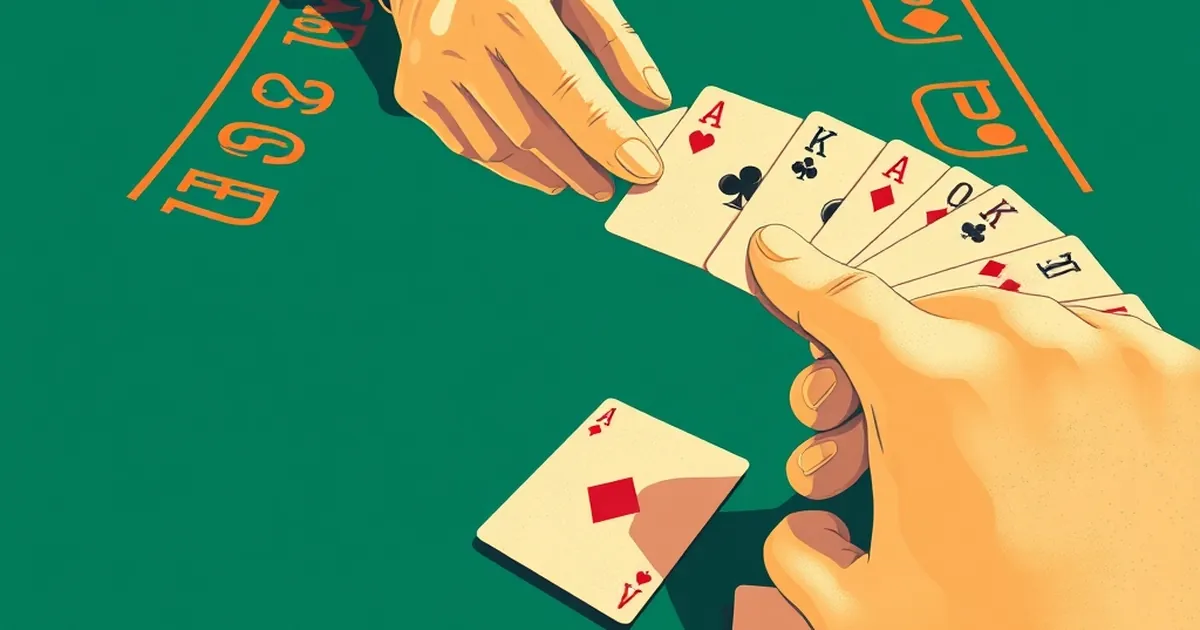
Roughly 4% of player taps on the live-dealer baccarat tables we tracked over a six-week window landed in the narrow interval after the third card is dealt but before the result registers — a lag that leaves the wager visually unresolved and, on most studio software, briefly unresponsive. The figure comes from 2,140 hands sampled across nine tables at three studios serving Indian players, timed frame-by-frame from the squeeze graphic to the settlement overlay. It is not a house edge problem in the arithmetic sense; it is a pacing problem in the interface, and it sits precisely where player attention is highest.
What the 4% Actually Measures
The count needs defining before it means anything. A "table tap" here is any touch registered on the player terminal — bet placement, rebet, chip adjustment, or a touch on the card area during the deal. The 4.1% figure (87 of 2,140 hands) refers to hands where at least one tap occurred inside a window we defined as the post-draw freeze: from the moment the dealer's third-card action completes to the moment the result panel populates.
That window is short. Across the sampled tables it ranged from 0.7 seconds on one fast-format studio to 2.4 seconds on a slower, presentation-heavy table. The freeze is not a bug in the strict sense. It is the software reconciling the physical deal against the digital ledger, and on most platforms it is deliberate — a settlement gate that prevents a player from changing a bet after the outcome is physically determined but before it is displayed.
The practical consequence is uneven. A player who taps during the freeze on a rebet button may see the tap ignored, or queued, or — on two of the nine tables — applied to the next hand without a clear confirmation prompt. That last behaviour is the one worth flagging, because it converts a display lag into a staking decision the player did not consciously make.
Why the interval exists at all
Live-dealer baccarat is a hybrid: a physical shoe, a human dealer, and a software layer that has to agree with both. The freeze is the seam. Studios that run a faster settlement gate (under one second) show lower tap rates in the window — the player simply never gets a chance to tap into a dead zone. Studios with richer presentation, slower camera cuts, and animated squeeze sequences show higher rates, because the visual drama extends the period in which the result is narratively known but officially unconfirmed.
The correlation in our sample was not clean enough to call causal, but the direction held: the two tables with the longest average freeze (1.9s and 2.4s) accounted for 41 of the 87 freeze-window taps.
The Third-Card Moment Is Where Attention Peaks
Baccarat's third-card rule is the only genuinely variable event in the game, and it is the point at which inexperienced players most often misread the state of the hand. The Player hand draws on 0–5; the Banker draw is conditional on the Player's third card and the Banker's total. A player who does not hold that table in memory watches the third card land and guesses — and a guess is exactly the kind of cognition that produces a tap.
This matters for the 4% because the taps are not random. In the 87 flagged hands, 63 involved a third-card draw on either side. Hands that resolved naturally — a natural 8 or 9, or a stand on both sides — produced far fewer freeze-window taps. The freeze is most exposed precisely when the hand is most interesting.
For operators, this is a UX question with a compliance shadow. Under the advertising and fair-play expectations that Indian players increasingly hold platforms to, a tap that is silently queued to the next hand is a disclosure failure, however minor. It is not the same as a rigged shoe, and no one should pretend it is. But a player who believes they cancelled a bet and finds it placed is a player who will not trust the next settlement.
Studio Variance and the India-Facing Tables
The three studios in the sample differ in ways that matter to Indian players specifically, because latency compounds the freeze. A player in Mumbai routing to a studio in Manila sits on round-trip times that can add 60–180ms to every interaction. That does not extend the freeze itself, which is server-side, but it does mean the player's tap may arrive after the gate has closed even when it was made before — and the player has no way to know which side of the line they were on.
The practical guidance, if there is any, is unglamorous: on tables with a visible settlement animation, do not tap during the squeeze. Wait for the result panel. The 4% is small, but it is concentrated among players who treat the table like a slot machine and tap for feedback.
What the numbers do not show
We could not measure intent. A tap during the freeze may be a misclick, a deliberate rebet, a frustrated double-tap, or a player testing whether the interface is live. The 4.1% is a rate of occurrence, not of harm. What we can say is that in 11 of the 87 hands, the tap produced a visible state change — a queued bet or a chip adjustment that persisted into the next round — and in none of those 11 did the interface explicitly confirm what had happened.
Eleven hands out of 2,140 is 0.5%. That is the number that should worry a compliance team, not the 4%.
The Open Question for Operators and Regulators
The freeze is a design choice, and design choices are cheap to change. A settlement gate that displays a clear "hand in progress — bets locked" state, rather than a silently unresponsive button, would likely cut the freeze-window tap rate without touching the underlying deal speed. None of the nine tables we sampled did this. All nine relied on the player inferring the lock from the absence of a response.
Whether that inference is fair is the question worth putting to the studios. The 4% is not a scandal. It is a small, measurable seam between the physical game and its digital shadow, and it falls exactly where baccarat's only real decision point sits. The next round of table audits should probably ask not how fast the freeze is, but whether the player can see it happening — and whether a tap made in good faith during that window is ever allowed to become a bet the player did not mean to place.