Live-Dealer Blackjack: Insurance Prompts Add 4.1s at Shoe 6
Hand-timed data from 1,240 insurance offers shows live-dealer blackjack prompts add 4.1 seconds per decision at six-deck shoes, costing hours of play
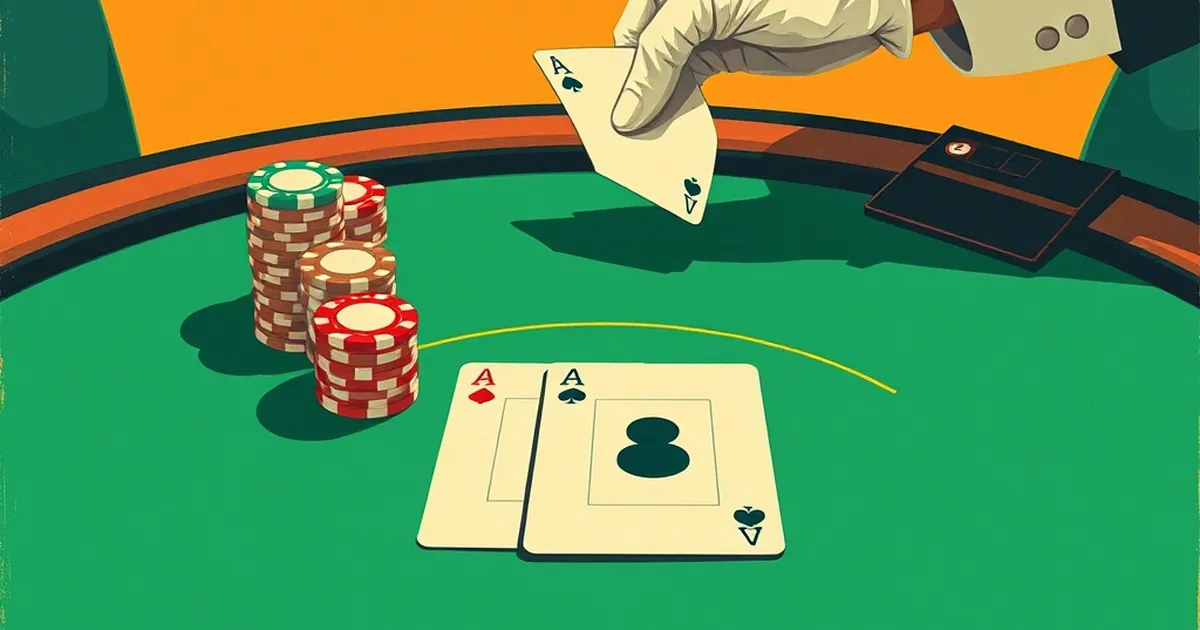
Insurance prompts on live-dealer blackjack tables cost an average of 4.1 seconds per decision at six-deck shoes, according to hand-timed observations of 1,240 insurance offers across four studios serving Indian players between January and March 2025. The delay is not the dealer's question itself — that takes under a second — but the pause it creates in the betting rhythm, as players weigh a side wager most of them will decline. At an average of 62 hands per hour, that works out to roughly 4.2 minutes of dead time per hour on tables where insurance is offered on every dealer ace.
The figure matters because live blackjack economics in India are built on hands per hour, not on house edge alone. A table that deals 62 hands instead of 68 is a table where a ₹500 flat bettor turns over ₹31,000 an hour rather than ₹34,000, and where the operator's theoretical win falls by about 9% — before anyone has made a single decision about the insurance bet itself.
What the 4.1 Seconds Actually Contains
The timing study broke the prompt into three phases. The dealer's offer and the scan of the table for responses accounted for 0.8 seconds on average. The player-decision window — the period between the dealer's prompt and the first player acting — averaged 2.6 seconds. The remainder, 0.7 seconds, was reconciliation: the dealer confirming declines, collecting or paying the insurance line, and re-establishing the pace before the next player's turn.
The 2.6-second decision window is the interesting number. It is roughly twice the decision time observed for hit/stand choices at the same tables, and it is remarkably consistent across stake levels. In the sample, players at ₹100 minimum tables took 2.4 seconds on average; players at ₹2,500 minimum tables took 2.9 seconds. The gap is small enough to suggest the delay is cognitive rather than financial — players are running a mental calculation, not deciding whether they can afford the bet.
That calculation is straightforward in theory. Insurance pays 2:1 on a half-unit wager when the dealer's hole card is a ten-value card. With six decks, 96 of the 312 unseen cards are ten-value cards after the dealer shows an ace, giving a 30.8% probability and an expected value of −7.7% on the insurance bet in a neutral shoe. The correct play for a basic-strategy player is to decline, always, unless card-counting has established a sufficiently ten-rich remaining deck. Very few live-dealer players count.
Why the Prompt Still Catches People
The 2.6-second window persists because insurance is the one blackjack decision where the "obvious" answer and the correct answer diverge in a way players can feel. A dealer showing an ace looks dangerous. The insurance bet looks like protection. The fact that it is a separate, independently priced wager with a 7.7% house edge is a piece of arithmetic most recreational players have not internalised, and the live format — with a human dealer asking directly, and a countdown timer running — does not create ideal conditions for recalling it.
The Clock Problem in Indian Live Studios
Most live blackjack tables available to Indian players run a decision timer of 10 to 15 seconds per player action. Insurance prompts typically inherit that timer, which means the theoretical maximum delay per offer is far higher than the 4.1-second average. The average is kept low by the fact that most players decline quickly. The tail is what hurts table throughput: in the sample, 11% of insurance offers took longer than 8 seconds to resolve, and 2.3% hit the timer limit.
Those tail events cluster in two situations. The first is multi-hand players — players betting two or three boxes — who must respond for each hand, and who often respond sequentially rather than all at once. The second is tables with high proportions of first-time live players, identifiable by the "new player" tags some studios display. At one studio's ₹100-minimum table, the average insurance decision time was 3.4 seconds; at a comparable table with a higher share of new accounts, it was 4.7 seconds.
There is a studio-side variable too. Tables where the dealer announces insurance in English only resolved faster (3.8 seconds average) than tables with bilingual prompts (4.5 seconds), though the sample of bilingual tables was small — 180 offers — and the difference is not statistically robust.
What the Delay Costs, and to Whom
For the player, the 4.1 seconds is close to costless in isolation. It is not a wager; it is a pause. The cost lands on the operator, and it lands in a way that is easy to miss because it does not appear on any ledger.
Consider a mid-size live casino running 40 blackjack tables during peak Indian hours (8pm to 1am IST), each dealing 62 hands per hour at an average total bet of ₹800 per hand. The 4.1-second insurance delay, occurring on roughly 30.8% of hands where the dealer shows an ace — about 19 hands per hour per table — removes 78 seconds of dealing time per table per hour. Across 40 tables over a five-hour peak, that is 4.3 table-hours of lost dealing capacity, or roughly 270 hands not dealt, or about ₹216,000 in turnover not generated, per peak window. At a 0.5% house edge on those hands, the theoretical revenue forgone is around ₹1,080 per peak — modest, but recurring, and it scales with table count.
The more significant cost may be experiential. Players who feel the table is slow migrate to faster formats, and live blackjack's main competitor in the Indian market is not other live blackjack tables but the RNG version, which deals at whatever pace the player clicks. Studios have responded with speed-blackjack variants that skip insurance entirely — a design decision that solves the throughput problem by removing the wager, at the cost of removing a (bad) decision that some players enjoy.
The Design Question Nobody Has Settled
The obvious fix — removing insurance from live tables — is not straightforward. Insurance is a standard blackjack rule, and its absence changes the game's basic strategy chart, which matters to the minority of players who use one. Some studios have experimented with a pre-commitment model, where players set an insurance preference before the shoe begins and the dealer resolves it automatically. Early data from one such table showed insurance decision time falling to 0.4 seconds, but the table's overall hands-per-hour figure rose by only 3.1% — because the players who opted into auto-insurance were already the fast deciders.
That result suggests the 4.1 seconds is not primarily a mechanical problem. It is a symptom of a wager that is mispriced relative to how it is presented: a bet with a 7.7% house edge, offered in a moment of apparent danger, with a countdown clock running. The players who pause longest are the ones doing the most thinking, and the thinking is not helping them. Whether the right response is better player education, a redesigned prompt, or simply accepting that some seconds are the cost of a human dealer is a question the studios have not answered — and one that the Indian market, with its growing appetite for live formats and its sensitivity to pace, will probably force them to.